Inflation in the United Kingdom (1966-2022) -An application of the Classical-Marxian theory.

Module: BU40024 Dissertation (Economics and International Business, University of Dundee)

Word Count: 6800 (Main body, Chapter 1-5, excluding figures and tables.)

Wayne Scott


Abstract

Shaikh (et al,1999) (2016) proposes a Classical-Marxian theory of inflation. In contrast to Neo-Classical and Keynesian perspectives, Shaikh sees the limit to growth not in full employment, but in corporate profitability. It also states that money is endogenous to capitalism. From this a demand-pull, supply-resistance model is developed in which inflation is driven by new credit relative to GDP, and the rate of growth utilisation. Handfas (2012) has shown the long run validity of the theory in 10 countries including Britain from 1950-2010. This thesis aims to build upon these previous works showing the long-run validity of the model in the British context, including the period following the Great Recession of 2007-2009. To carry this out, ARDL-ECM modelling was used to test the theory for the years 1966-2022. The obtained results show a significant long-run relationship between the growth utilisation rate and inflation, whilst no significant relationship was found for relative new purchasing power. These results challenge the mainstream theories that recent inflation is driven by excessive growth of the money supply, or by a wage-price spiral, and can prove useful for trade-unionists engaged in negotiations for wage rises that meet the cost of living.

Acknowledgements

I would like to extend my gratitude to my dissertation advisor, Carlo Morelli, for the encouragement and advice he has offered throughout the process of writing this thesis. I would also like to thank Oktay Özden for the invaluable advice he has given me on econometric modelling. My appreciation also extends to Tu Senan, from the International Secretariat of the Committee for a Workers’ International, for our ongoing discussions on the causes on inflation in terms of Marxist theory. Finally, I would like to thank Bruce Wallace for allowing me to engage in his course on Marxist political economy in 2012, and the many informal discussions in Wetherspoons over fish and chips, without which, I wouldn’t have applied to study economics.

Table of contents
1 Introduction6
2 Literature review9
2.1 Endogenous money9
2.2 Phillips Curve10
2.3 NAIRU11
2.4 Full employment: The limit to growth?12
2.5 Supply resistance12
2.6 Demand pull14
2.7 Inflation and Interest Rates15
3 Methodology16
3.1.1 Model 118
3.1.2 The datasets18
3.1.3 OLS regression19
3.1.4 Descriptive statistics20
3.2.1 Model 221
3.2.2 The datasets21
3.2.3 OLS regression22
3.1.4 Descriptive statistics23
3.3.1 Model 324
3.3.2 The Datasets25
3.3.3 Descriptive Statistics25
3.3.4 Testing the Model25
3.3.5 Stationarity Testing26
3.3.6 Optimal Lag Length27
3.3.7 Long Run and Short Run Analysis27
3.3.8 Inclusion of Dummy Variables28
3.3.9 Testing for Serial correlation28
3.3.10 Testing for heteroscedasticity29
3.3.11 Testing for Normality29
3.3.12 Stability29
4 Results30
4.1.1 Model 130
4.1.2 Stationarity30
4.1.3 OLS output31
4.2.1 Model 232
4.2.2 Stationarity32
4.2.3 OLS output33
4.3.1 Model 334
4.3.2 Stationarity34
4.3.3 Optimal Lag Length35
4.3.4 Short run analysis35
4.3.5 F-Bounds Test36
4.3.6 Long Run analysis36
4.3.7 Heteroscedasticity38
4.3.8 Serial Correlation38
4.3.9 Normality and Stability38
5 Discussion40
5.1 Limitations and Suggestions for Further Study42
5.2 Conclusion43
6. Bibliography44
List of Figures
Figure 1Estimates for contributions to annual “GDP inflation” 2022, quarter 4 (Choonara, 2023)

Figure 2The Price-Inflation-Phillips-Curve. (Froyen, 2014, p.215)
Figure 3The Long-Run Phillips Curve. (Froyen, 2014, p. 217)
Figure 4Nominal GDP growth (GGDP) and Relative New Purchasing Power (e ), 1966-2022
Figure 5Real GDP growth (RGDP) and The Net Incremental Rate of Profit (rr’), 1966-2022.
Figure 6Implicit GDP deflator (π), Relative New Purchasing Power (e ) and the Growth Utilisation Rate(σ).
Figure 7Akaike Information Criteria for Model 3 (Top 20 Models)
Figure 8Actual-Fitted-Residual graph
Figure 9Jarque-Bera Test
Figure 10CUSUM Test
Figure 11CUSUMSQ test
Figure 12The Net Incremental Rate of Profit (rr’), 1966-2022
Figure 13Normalised growth utilisation and inflation rates, USA & United Kingdom (Standardised scaling)
(Shaikh, 2016 (USA), Authors calculations (UK))
Figure 14Unutilised growth capacity and inflation rates, United Kingdom, 1966-2022
List of Tables
Table 1The Datasets and their Sources
Table 2Descriptive statistics for Model 1
Table 3Descriptive statistics for Model 2
Table 4Descriptive statistics for Model 3
Table 5Dummy Variables in the Model.
Table 6Stationarity tests for Model 1. Augmented Dickey-Fuller and Phillips-Peron
Table 7Ordinary Least Squares output for Model 1
Table 8Stationarity tests for Model 2. Augmented Dickey-Fuller and Phillips-Peron
Table 9Ordinary Least Squares output for Model 2
Table 10Stationarity tests for Model 3, Augmented Dickey Fuller and Phillips-Peron.
Table 11Short-Run Error Correction Model
Table 12F-Bounds Test
Table 13Cointegrating Equation and Long-Run Coefficients
Table 14Breusch-Pagan-Godfrey Test
Table 15Breusch-Godfrey Test

1. Introduction

Mainstream theories have been unable to adequately explain increasing inflation internationally following the Covid-19 pandemic (Roberts, 2023). Echoing post-Keynesian theory, Andrew Bailey, Governor of the Bank of England argued that workers should show restraint in pay negotiations in order to prevent a wage-price spiral (Burden, 2022). However, data for Britain shows that in 2022, the largest contributing factor to price rises was not wage growth, but unit capital costs as shown in Figure 1. Monetarist theory argues that inflation is a purely monetary phenomenon (De Grauwe and Polan, 2005). This means that inflation is caused by excessive money supply growth without a corresponding rise in production (ibid). However increasing money supply has not been shown to have a significant impact on inflation rates in Britain in the long run (Handfas, 2012).


Figure 1. Estimates for contributions to annual “GDP inflation” 2022, quarter 4 (Choonara, 2023)

Shaikh (et al, 1999) (2016. ch.15) develops a Classical-Marxian1 demand-pull/supply-resistance theory of inflation which stands in opposition to the mainstream theories. The demand side variable in this theory is the growth of new purchasing power relative to GDP (e). It is argued that new credit is made available because companies demand it in order to expand production. Therefore, nominal GDP growth is a function of relative new purchasing power. A portion of this newly available credit will not be absorbed fully by supply contributing positively to inflationary pressures. Whilst this is consistent with the monetarist accounts, it starts from an alternative theoretical foundation of endogenous money. The role of new credit in the this theory tends to have a more significant impact on inflation in the presence of hyperinflation, or when inflation reaches a “critical level”.

Whilst for both the Post-Keynesian and monetarist schools, full employment is the limit to growth (ibid), the Classical-Marxian theory argues that the limit to growth is the corporate incremental net rate of profit (rr’), and that real output growth responds positively to profitability. This theoretical growth limit is reached when entirety of the corporate net operating surplus is reinvested back into production (when I/P=100%). As the real rate of growth begins to reach its limit, this produces a bottleneck situation in which supply becomes tighter and prices begin to rise. This represents the process of supply resistance in the Classical-Marxian model. Shaikh (et al,1999) originally termed this supply-side variable the “throughput limit”, and later the “Growth Utilisation Rate”, represented byσ (2016, Ch.15).

Therefore, in the Classical-Marxian model inflation is a function of the growth utilisation rate, the net rate of profit and relative new purchasing power. The model can be summarised as follows (Shaikh, 2016, pp.698-703);
Nominal output growth as a function of RNPP
Gy= F(e )
+

Real output growth as a function of RNPP, profitability, and growth utilisation
Gyr= F(e, rr’, σ)
+, +, –

Inflation is the difference between nominal and real GDP growth
π= Gy-Gyr

Inflation as a function of RNPP, profitability and Growth utilisation.
π= F(e, rr’, σ)
+, -, +

σ can alternatively be expressed as 1-σ to represent unutilised growth capacity, similar to the role of unemployment in the Phillips Curve
π= F(e, rr’, 1-σ)
+, -, –


Simplified form
π= F(e,
σ)
+, +/-

Shaikh’s theory has shown empirical validity in a number of countries. Handfas (2012) utilises econometric analysis showing a statistically significant long run relationship in 10 countries, including Britain, and six other OECD countries. Özden and Bolkol (2023) found similar results for 23 European Countries between 2001-2020. However, the impact of relative new purchasing power was not found to be significant.

This dissertation utilises the Autoregressive Distributive Lag – Error Correction Model (ARDL-ECM) to test for the presence of a long run relationship between inflation and the hypothesis set out in the Classical-Marxian model. The obtained results show that the model is a good fit with actual inflation rates.

2.Literature Review

This literature review addresses debates about the nature of money. This is followed by an outline of key theories of both the Monetarist and post-Keynesian schools regarding inflation, before outlining the Classical-Marxian theory and its supporting literature. At each stage, the theories are applied to real developments in the British economy over the selected period.

2.1. Endogenous money

In the Ricardo-Hume quantity theory, the national price level derives from the level of money in a national economy (Humphrey, 1974). This premise laid the theoretical basis for Friedman’s notion that inflation is always a monetary phenomenon (De Grauwe and Polan, 2005). The quantity theory was rejected by Marx (1990), as well as others such as Tooke and Newmarch (1928). In opposition to Ricardo, it is argued that price level determines the quantity of money (Somerville, 1933, pp.334-335). Therefore, we can see the differences in the approach expressed as thus:

QTM: MV=PY (1)  

Marx: PY=MV (2)

Where MV=Money supply*Velocity of circulation, and PY=Price Level*Output (Roberts, 2020). Whilst Marxists accept the basic relationship expressed in equation 1, the causal direction is inverted. The values of commodities are not determined by the quantity of money in circulation but by the labour content required to produce them. This forms the basis for prices of production (ibid). Therefore, changes in the money supply won’t succeed in determining inflation rates (ibid). Shaikh (2016, p.191) points out that new credit, which is technically limitless based on fiat currency, is made available following the demand for it from capitalists to meet the needs of expanding production. Money, therefore, is endogenous in the classical and Marxian frameworks, an assumption also shared by the post-Keynesian school (ibid) (Nayan et al., 2013)


2.2. Phillips curve
One way to analyse the relationship between inflation and unemployment during the post-war era was the Phillips curve. Whilst the original Phillips curve suggested an inverse relationship between wage-price growth and unemployment (Phillips, 1958), this was later adapted to a model to explain general inflation. Since reducing unemployment increased the bargaining power of workers, these increased wages would find their way into prices (Samuelson and Solow, 1960). This idea seemed to hold true in the years following the WW2. However, the 1970s marked a turning point when economies experienced a phenomenon known as “stagflation,” characterised by simultaneous increases in both inflation and unemployment alongside a decline in output, exposing the limitations of the Phillips curve model (Shaikh, p.703). This notion is also closely tied to the wage-price spiral theory (Blanchard, 1986). Research from the IMF suggests that there is little evidence to support that rising wages are a leading cause of inflation, and notes that in many advanced countries such as Britain, real wage growth has been stagnant (Alvarez et al., 2022).

Marx opposed the argument of modern Keynesians that increased wages lead to price inflation – the argument implicit in the Phillips Curve (Roberts, 2023). Arguing against those who warned workers not to fight for pay rises as these would be cancelled out by price rises, Marx (1996) took the view that since the value and hence the price of a commodity is regulated by the labour content required to produce them, increased wages do not mean increased prices, but declining rates of profit. Whilst the increased demand for consumer goods may increase prices in that sector, the declining profit rate will lead to reduced demand for luxury goods by the rich, and thus falling prices in that regard. The increasing demand for necessities leads to workers and fixed capital transferring from the luxury goods sector for supply to catch up with the increased demand, meaning prices returning to their original level (ibid). Marx argues that prices tend to rise, and wages slowly catch up as workers struggle for higher pay(ibid), the IMF study into the wage-price spiral confirms that this is the scenario that has played out in countries like Britain (Alvarez et al., 2022).


Figure 2. The Price-Inflation-Phillips-Curve. (Froyen, 2014, p.215)

2.3. NAIRU
The non-accelerating inflationary rate of unemployment (NAIRU) hypothesis (Espinosa-Vega and Russell, 1997) argues that trade-offs between inflation and unemployment are temporary. As workers begin to demand higher pay, firms will engage in cost cutting measures meaning unemployment will return to its natural rate. Keynesian stimulus therefore will result in inflationary surges (ibid). In the long run therefore, the Phillips curve adheres to a vertical trajectory. The NAIRU theory contends that the natural rate of unemployment is shaped by the state and constraints on competition, meaning that much of the unemployment in the 1970s was voluntary, as people opted to live on welfare instead (Shaikh, 2016, p.661)For Shaikh (2016, p.592) and Marx (1990, pp.781-793), there is also a persistent rate of unemployment that exists, however, this is an involuntary reserve army of labour to be pushed from and pulled into production according to the whims of capital. This analysis also extends to the under-employed (Magdoff, 2004).

Proponents of NAIRU have had to deal with developments in the latter half of the 2010s where unemployment was low in Britain, but this was not translating into wage or price inflation. This was attributed to a decreasing NAIRU because of underemployment (Bell and Blanchflower, 2018). Interest rates come to play a key role in controlling inflation in the NAIRU framework. If interest rates rise, this could increase unemployment and thus decrease inflation (Ball and Mankiw, 2002). This reflects the strategic approach taken by the Bank of England to increase interest rates in 2022 to “wring out” inflation (Pill, 2023).


Figure 3. The Long Run Phillips Curve. (Froyen, 2014, p. 217)

2.4. Full Employment: The limit to growth?
In the neoclassical approach, expansion of the money supply can only lead to rising prices as growth is restrained at the level of full employment (Ball and Mankiw, 2002). The Post-Keynesian school also argues that full employment is the limit to growth (Shaikh, 2016, p.660). Shaikh (2016, p.695) rejects this, as when faced with labour shortages, migrant labour can be used to expand production and services further. This basic fact is illustrated in the National Health Service, Britain’s largest employer, which could not function without skilled and unskilled immigrant workers (Baker, 2022). The migration of workers from former colonies to Britain in the post-war era played an instrumental role in fuelling the boom years, in the face of labour shortages brought by the death and destruction of the war (Thompson, 2014).  

2.5 Supply resistance
Shaikh (2016, p.468) therefore, argues that the limit to growth is not full employment of labour, but the net incremental rate of profit (Corporate Rate of profit – interest rate). This theoretical growth limit is reached when all surplus is reinvested back into production. The ratio of investment/profit is the growth utilisation rate (Shaikh, p.896). This is similar to the capacity utilisation rate utilised by Dumenil and Levy (1999) in their theory of inflation. This premise is derived from Marx’s schema of expanded reproduction, as well as Ricardo’s corn-corn model (Shaikh, 1973). Net profitability itself has shown a close correlation with real GDP growth in the USA in Shaikh’s work, whilst growth utilisation tracks inflation rates closely (Figure 13). The Marxian labour theory of value is central to the thesis. In the Marxian framework, the operating surplus of corporations derives from the exploitation of labour-power (Marx, 1990, 283-306). The capitalist-class can only invest back into production the surplus wealth produced by the working-class. Therefore, growth is limited by the amount of surplus-value in the economy. This notion of the available surplus value creating a limit to growth is summarised by Trotsky (1972);

“…only the values that have been created by human labour are at the disposal of society… where labour has created no new value, there even Rockefeller can get nothing.”

This approach has demonstrated its usefulness in explaining the phenomenon of stagflation in the 1970s. Shaikh demonstrates that in the USA, the profit rate fell faster than the growth utilisation rate, resulting in supply tightness and thus inflation (Shaikh, 2016, p.703). This led to a scenario where you had rising prices at the same time as rising unemployment, a phenomenon that couldn’t be explained by the post-Keynesian Phillips curve, or the neoclassical school which also saw inflation as a full-employment phenomenon (ibid). Handfas (2012) applies the Classical model to ten countries, including Britain. The results for Britain show a similar situation in the 1970s as that of the USA, of increased growth tightness combined with falling profit rates, fuelling both inflation and unemployment.

The overall trend in fixed capital investment in Britain changed considerably during the 1990s, which was largely tied to the neoliberal restructuring of the economy, particularly in the oil industry (Woolfson, Foster and Beck, 2013, pp.526-543). Facing falling profitability and rising prices, British oil producers competitively outsourced services such as IT, restoring profits. It was necessary to lower the value of fixed capital investment in this period as a direct attack on labour would not have been tolerated given the recent Piper Alpha disaster and the strikes for safety which followed (ibid). This period was also marked by intense de-industrialisation (Tomlinson, 2021). Fixed capital investment has generally remained quite low since this period, with a shift towards services in Britain rather than manufacturing (ibid). Services generally are resistant to improvements in labour productivity compared to manufacturing (Leys, 1995).

Whilst the Classical Marxian theory asserts that a falling profit rate increases inflationary pressures, an increase in corporate profits has been highlighted by trade unions such as Unite (2022) since the pandemic, to aid the argument that pay must increase to tackle the cost-of-living crisis. However, the price-level is path-dependent based on fiat currency (Shaikh, 2016, p.695), meaning that inflation is influenced by profitability in previous years also. As the Unite (2022) study shows, profitability was lower prior to the pandemic than it is currently which could have a lagged effect on inflation. This increase in profits gives credence to the argument that the current situation is one of profit-fuelled inflation, commonly called greedflation, and often a profit-price spiral (Choonara, 2023) (Roberts, 2023). However, it’s worth considering if it is high profits driving up inflation in the first instance, or inflation driving up profits. Marx (2010, p.16-18) explained in a letter to Engels that a period of inflation effectively lowers the price of labour whilst increasing the amount of surplus-value accrued by employers. This increases the rate of exploitation of workers, and thus profitability, unless wages rise at the same rate as prices (ibid).

2.6. Demand-pull
Handfas (2012) introduced a major change to Shaikh’s (et al,1999) original theory, which presented inflation as a supply-side phenomenon regulated by the growth tightness in an economy. Handfas recognised the role played by demand-side factors, the growth of new credit relative to GDP. In other words, excess demand. This appears similar to the monetarist argument that inflation is a monetary phenomenon. However, Shaikh (2016, p.719) argues that the growth of new credit tends to fuel inflation in scenarios where the inflation rate has risen above 20%. In situations in which we have lower inflation, the growth utilisation rate will play a larger role in determining inflation.

Whilst Marx wrote at a time when money was backed by gold and other precious metals which had a limit to its supply, the switch to fiat currency in the 20th century means that in theory, the money supply is limitless (Shaikh, 2016, p.191). Therefore, episodes of hyperinflation can be accounted for in the classical which has demonstrated a strong relationship between RNPP growth and inflation for countries such as Argentina, which experienced rates of inflation of up to 3000% (Shaikh, 2016, pp.719-721). This cannot be accounted for by reference to increased production, therefore, including excess demand into the model represented a step forward for the theory. This approach has been used by Barredo-Zuriarrain (2022) to argue that the hyperinflation rates in Venezuela can be explained by excessive government credit to subsidise the oil industry.

Özden and Bolkol (2023) applied the theory to 23 European countries, including Britain, and found a statistically significant relationship between inflation and the classical model. However, the regressions for each country are not shown, making it harder to draw conclusions about Britain. The classical model was shown to hold across the countries examined. However, the effects of changes in RNPP were not shown to play a significant role in determining inflation rates at the European level. This result can be expected given the low rate of inflation that has prevailed across Europe since the 1990s (Abdih, Lin and Paret, 2018).

3.7 Inflation and Interest Rates

The logic of the Classical-Marxian model outlined thus far would suggest that the 2022 increase in interest rates by the Bank of England (Pill, 2023) would be counter-productive to fighting inflation, as this lowers the net incremental rate of profit increasing supply tightness. However, if the growth utilisation rate, as a result of increased borrowing costs, falls at a faster pace than profitability, this can alleviate inflationary pressures. This can also reflect a longer-term goal of purging the system of unprofitable capitals. The rise of unprofitable “zombie-firms” in Britain, which exist only to service their debt, has long been noted in the literature (Adam Smith institute, 2013). The increase in interest rates has already led to insolvencies in England and Wales, reaching the highest level since the 2009 crisis (Financial Times, 2024). Marx highlighted that this process of companies going bust leads to their capital stock being acquired below its value by more profitable rivals (Marx, 1991, pp.339-349). Thus, raising the general rate of profit. The Classical-Marxian theory suggests that this would increase growth potential, stabilising inflation rates for a period. However, this can come at a costly price of triggering a recession and a sharp drop in demand (Choonara, 2023).


3.Methodology
To examine the validity of the Classical-Marxian model in the British context, it is necessary to test several assumptions underlying the theory before testing for the long run and short run coefficients of the main hypothesis.
As outlined in this section, a combination of regression models are used. Models 1-2 represent the assumptions of the theory, using the Ordinary Least Squares regression method to test for statistically significant positive relationships as hypothesised.

Given that the main (restricted) hypothesis of the Classical-Marxian model includes 3 variables in total, it is possible that we will see a range of orders of integration across the variables. Therefore, the ARDL-ECM model is utilised to account for possible mixed order of integration in Model 3. A summary of all datasets used to derive the variables, and their sources can be found in Table 1. Eviews 10 was used to carry out all regression models.

Table 1. The Datasets and their Sources


3.1.1 Model 1.

The first assumption of the Classical-Marxian model is that nominal output growth is a function of relative new purchasing power.
Gy=f(e)

This is due to the fact that the availability of new credit tends to fuel investment as it is issued following demands from private companies to meet the expanding need of production as outlined in the discussion on endogenous money in the literature review. Shaikh takes nominal GDP growth as a measure of nominal output growth. The variables are calculated as follows;

The dependent variables: Nominal GDP growth (GGDP)


The independent variables: Relative new purchasing power (e).


(Shaikh, 2016, pp.895-896)
3.1.2 The Datasets
Datasets for GDP and the current account were taken from the Office for National Statistics website. To proxy total credit, the Net Domestic Credit series from the World Bank was used. This was used as it was the only long run credit series available. Whilst M2 money supply data may have been an acceptable alternative, this data is not readily available before 1986Q4, which would therefore, limit the scope of analysis if used. Since the Net Domestic Credit series only includes annual data, this also restricts us to using annual data across all datasets. Current account data was taken from the ONS website.
3.1.3 Ordinary Least Squares
Shaikh (2016, pp.705) demonstrated a positive and statistically significant relationship between GGDP and e for the United States between 1950-2010 using the Ordinary Least Squares method (OLS), with two lags on the independent variable, which is done for this test. Research which has applied the Classical-Marxian model to European countries found that e does not have a significant impact on inflation levels (Özden and Bolkol, 2023), therefore, it is possible that the results may show that this hypothesis does not hold for Britain.

The general form for the OLS regression is expressed as;


By substituting in our dependent and independent with two lagged independent variables, this becomes;


The Augmented Dickey-Fuller(ADF) and Phillips-Peron(PP) method were applied to test for stationarity at different levels prior to running the regression model, in order to avoid a spurious result. The variables must show the same order of integration against the constant and/or trend, otherwise alternatives must be explored

3.1.4 Descriptive Statistics

Table 2. Descriptive statistics for Model 1


Figure 4. Nominal GDP growth (GGDP) and Relative New Purchasing Power (e ), 1966-2022

3.2.1 Model 2
In the Classical-Marxian model, the growth of real output is a function of relative new purchasing power, the net incremental rate of profit and the growth utilisation rate;
Gyr= F(e, rr’, σ)
+, +, –

Shaikh shows that a strong positive relationship exists between real GDP growth(as measure of real output), and the net rate of profit alone for the USA. Therefore, a restricted formula is tested in which real GDP growth is taken as a measure of real output growth;

RGDP=f(rr’)

This is because investment follows profitability positively. As profitability increases, investment, and thus real GDP will grow. The variables can be represented as follows:


(Shaikh, 2016, pp.895-896)

3.2.2 The Datasets
The datasets for real GDP growth available from the World Bank were used. Whilst Shaikh uses net operating surplus to calculate rr’, the only readily available datasets for Britain shows gross operating surplus of corporations, available from the Office for National Statistics website. This data is used as as a proxy for net operating surplus. This has also been done in other applications of the Classical-Marxian model, including Özden and Bolkol (2023), who demonstrate that GOS and NOS correlate closely, meaning that changing the variable doesn’t significantly impact the model. The only long-run series representing corporate gross fixed capital formation is only available from 1997 onwards as previous data was removed due to accounting errors. Therefore, it is necessary to use a constructed dataset combining the most recent dataset with an archived one ending in 2016, prior to the amendment. Datasets for interest rates were taken from the Bank of England website. For the years 1966-2022, an annual interest rate was calculated based on 12-month averages.

3.2.3 OLS Regression
Shaikh does not use regression modelling to test this hypothesis for the USA, instead showing results visually using a boxplot. However, there is no reason that we cannot apply the same OLS regression method applied in Model 1 to this hypothesis. Since the OLS regression model is represented;


Ho: No statistically significant relationship between RGDP and rr’
H1: A statistically significant relationship between RGDP and rr’

The ADF and PP tests were again applied prior to running the regression model.


3.2.4 Descriptive Statistics

Table
3. Descriptive statistics for Model 2


Figure 5. Real GDP growth (RGDP) and The Net Incremental Rate of Profit (rr’), 1966-2022.

3.3.1 Model 3.The main hypothesis of the Classical-Marxian model is that inflation is determined by the demand pull of new purchasing power, and the supply resistance determined by net profitability and the growth utilisation rate;

π=f(e ,rr’,)
+, – , +


As Shaikh demonstrates, rr’ and correlate closely, meaning that the model can be further simplified to
π=f(e, )
+, +/-


The variables can be derived as follows:


(Shaikh, 2016, pp.895-896)

3.3.2 The Datasets

Datasets for e have already been derived to test the assumptions. Office for National Statistics datasets were used for both GFCF and GOS. As in the previous models, a constructed series was used for GFCF, and the Gross Operating Surplus of corporations series was used to proxy GOS. The implicit GDP deflator series is taken from the Office for National Statistics website. Other measures such as the Retail Prices Index or the Consumer Prices Index, which are more common measures in matters such as wage negotiation, may also be suitable datasets for inflation (Unite 2022). Unlike RPI, the GDP deflator doesn’t take into account inflation on imported goods (Office for National Statistics, 2023), including import price rises stemming from the Ukraine War and the pandemic (Caporale et al., 2022)

3.3.2 Descriptive Statistics


3.3.4 Testing the Model
To test the model, the ARDL-ECM cointegration approach first developed by Pesaran et al. (2001) is utilised. ARDL models are suitable for analysing the Classical-Marxian model as it can handle variables that are of mixed order of integration as long as they are stationary at I(0) or I(1). Since the ECM utilises first differences, variables will become stationary and thus cointegrated in the model (Asteriou and Hall, 2007, 310-311). The ARDL-ECM model is also suitable for the Classical-Marxian model, which is based on path-dependent prices (Shaikh, 2016, p.695), as it includes lagged values of both the dependent and independent variables (Asteriou and Hall, 2007, 310-311). This is the approach used by Handfas (2012) which showed significant long run relationships across 10 countries.

Since the dataset begins shortly before the inflationary spiral of the 1970s, a visual inspection of the inflation series shows a distinctive downward trend, as does the dataset for . This would indicate non-stationarity. The dataset for e appears to be trendless and hence stationary. This suggests a mixed order of integration making the ARDL-ECM the ideal approach


3.3.5 Stationarity Testing.

A number of tests are applied to test for stationarity. The Augmented-Dickey Fuller (ADF) test is a widely used test in econometric measuring. However, the ADF is not the strongest test for stationarity as noted by Handfas (2012). Therefore, the Phillips-Peron (PP) test is also applied, as it was in Models 1&2. If as anticipated the variables show a mixed order of integration of I(0) and I(1), then we can proceed to derive the ARDL-ECM model, as the variables become cointegrated in the ECM. If any variables reveal stationarity at I(2), we cannot proceed with the ARDL model.


3.3.6 Optimal Lag Length
To determine the optimal number of lags for both our dependent and independent variables, the Akaike Information Criterion is applied;


HO: No long-run relationship between variables
H1: A Long run relationship exists between variables


From this, we can then derive the ARDL model.


This can be further modified by including the ECM term to allow us to see how the model moves from the short-run to the long run. If the cointegrating error correction model yields a negative and significant result, this is evidence of movement from the short run to the long-run equilibrium.


3.3.8 Inclusion of Dummy Variables.

To account for the impact of policy shocks, a number of annual dummy variables are included. This was the approach adopted by Handfas (2012). Included are the same years as Handfas, with dummies added to the years 2020-2021 to account for the impact of the pandemic and the shocks to both supply and demand during this period.

Table 5. Dummy Variables in the Model.


3.3.9 Testing for Serial correlationIt is necessary to test for the presence of serial correlation in the model. To do this the The Breusch-Godfrey Test is applied. A p-value below the 5% significance level suggests the presence of serial correlation, meaning that the null hypothesis of no serial correlation cannot be rejected,
H0: No serial correlation at up to 2 lags
H
1: Serial correlation at up to 2 lags
(Breusch, 1978) (Godfrey, 1978)

3.3.10 Testing for heteroscedasticityThe regression returns a Durbin-Watson value. A value close to 2, which is the ideal value, indicates little evidence of heteroscedasticity, and evidence for a constant variance of the residuals. The Breusch-Pagan-Godfrey Test is also applied to further test for heteroscedasticity in the results. A p-value below the 5% significance level suggests the presence of heteroscedasticity in the model, meaning that the null hypothesis of homoscedasticity cannot be rejected;
H0: Homoscedasticity
H
1: Heteroscedasticity (Breusch and Pagan, 1980)


3.3.11 Testing for Normality
To determine if the residuals of the model output are normally distributed the Jarque-Bera (1980) test is applied. Residuals are normally distributed when they follow the classic bell-curve shape. A p-value below 5% indicates that the residuals do not follow normal distribution, meaning the null hypothesis of normal distribution cannot be rejected.

H0: The residuals are normally distributed.
H
1: The residuals are not normally distributed.

3.3.12 Stability
To test for the presence of structural breaks, the CUSUM and CUSUMSQ tests developed by Brown et al. (1975) are applied. This tests both the long-run and short-run coefficients. If the coefficients stay within the 5% significance level, we can conclude that the residuals in the model are stable and do not deviate substantially from the mean.

4. Results

4.1.1 Model 1
4.1.2 Stationarity.The ADF and PP tests returned similar results. GGDP was shown to be not significant at the 5% level in both tests when only the constant term is included, whilst at levels, e shows significance at the 1% level. The GGDP series becomes significant at the 5% level in both tests when the constant and trend terms are included. Therefore, there is no need to take the first differences of the series

Table 6. Stationarity tests for Model 1. Augmented Dickey-Fuller and Phillips-Peron


4.1.3 OLS Regression Output

Table 7. Ordinary Least Squares output for Model 1.


Overall, the model seems to perform poorly. The coefficient for the independent variable e is not statistically significant at any level of lag (as indicated by the high p-values). The R2 value is reasonably high at 57%, however the Durban-Watson statistic is 1.00, far from the ideal value of 2, indicating the presence of heteroscedasticity in the model.

4.2.1 Model 24.2.2 StationarityAs in Model 1, the ADF and PP tests are applied to ensure the same order of integration of I(0) or I(1). As can be observed, both tests show stationarity at levels across all criteria. The trend term is restricted, including only the constant term in the regression model.

Table 8. Stationarity tests for Model 2, Augmented Dickey-Fuller and Phillips-Peron

4.2.3 OLS Regression Model

Table 9.
Ordinary Least Squares output for Model 2.


The output suggests that there is a statistically significant relationship between the net incremental rate of profit and the real output growth rate, with a positive coefficient indicating that an increase in the net incremental rate of profit is associated with an increase in real output growth. The coefficient value is 0.979 suggesting the relationship is remarkably strong. The R2 value is 0.244, indicating that other factors also influence real GDP growth, as would be expected from testing a restricted formula.

4.3.1 Model 3

4.2.2 Stationarity

Table 10. Stationarity tests for Model 3, Augmented Dickey-Fuller and Phillips-Peron.


Both tests returned similar results. As anticipated, e is stationary at I(0) whilst π and σ show stationarity at I(1). Since we have a mixed order of integration, we can proceed to run the ARDL-ECM model as variables of mixed integration will become cointegrated in the ECM.

4.3.3 Optimal Lag Length


The results of the AIC test shows that the optimal number of lags for the models. The result is 1,0,3,0,0,0, with 1 lag applied to π, 3 lags applied toσ and no lags applied to e or any of the dummy datasets.

4.3.4 Short -Run analysis


Table 11 displays the short-term results from the error correction model. D(σ) with a p-value of 0.811, and D(σ-1) with a p-value of 0.537 are not statistically significant at the 5% level. D(σ(-2)) is statistically significant at the 1% level with a p-value of 0.003 and has a negative coefficient of -0.191. In the restricted formula tested,σ can have a positive or negative impact. Likewise, the cointegrating ECM term coefficient is negative at -0.35 and statistically significant at the 1% level, returning a p-value of 0.000 suggesting that the model shows convergence from the short run to the long run equilibrium, however the speed of adjustment is relatively slow. The observed-R2 results is 71.72% suggesting that the model is a relatively good fit.

4.3.5 F-Bounds Test

Table 12. F-Bounds Test


The obtained results from the F-bounds test show an f-statistic of 7.882. This value exceeds all the upper bounds across all significance levels and sample sizes. Therefore, we can conclude that there exists a long run relationship between the variables.

4.3.6 Long-Run Analysis

Table 13. Cointegrating Equation and Long-Run Coefficients


The long run results obtained from the ARDL model show that σ(-1) is positive, yet not significant at the 5% level. The coefficient for e is close to 0, with a p-value of 0.888, and is therefore not statistically significant at the 5% level, suggesting a weak relationship between inflation and relative new purchasing power in the UK. The Dummy series is statistically significant and negative, but more importantly, our Dummy*σ series is statistically significant and positive, showing a long-run relationship between π and σ when the impact of policy shocks are accounted for. The series Dummy*e continued to show insignificance when shocks are accounted for. Therefore, we cannot conclude that e has a statically significant effect on inflation in the long run, with σ being able to account for most of the changes in the model.


4.3.7 Heteroscedasticity


The results of the Breusch-Pagan-Godfrey Test show a P value of 0.3270, meaning our results are not significant at the 5% level. Therefore, the null hypothesis of homoskedasticity cannot be rejected. The lack of heteroscedasticity was also indicated by the Durbin-Watson statistic in our ARDL-ECM results as it was close to the ideal value of 2 at 2.013

4.3.8 Serial Correlation


The results of the Breusch-Godfrey LM Test returned a P value of 0.1945, meaning our results are not significant at the 5% level, suggesting little evidence of serial correlation up to 2 lags. Therefore, we cannot reject the null hypothesis of no serial correlation in the model.


4.3.9 Normality and Stability

The Jarque-Bera test analyses the normality of distribution of the residuals. The returned p-value is 0.839, exceeding the 5% significance level. Therefore, we fail to reject the null hypothesis of normal distribution of the residuals. Our CUSUM and CUSUMSQ output also show that our residuals stay with the 5% bounds demonstrating stability in the model.

5. Discussion

The results derived are consistent with the Classical-Marxian theory of inflation. The only assumption that was not shown to hold is a positive relationship between nominal GDP growth and relative new purchasing power. The results showed an insignificant, weak, negative relationship. There are several reasons why this may be the case. Nominal GDP growth has been largely stagnant since the 1990s. Britain has experienced an explosion in the service sector (Tomlinson, 2021). The service sector is associated with lower output growth, and less room for improvements in labour productivity compared with that of manufacturing (Leys, 1995). In the period of de-industrialisation, the growth of credit in this period likely flowed into services and speculation, weakening the link between new credit and nominal output (ibid).

A significant and strong positive relationship was observed for the assumption that RGDP=f (rr’). Whilst the Classical-Marxian theory argues that falling rr’ lowers the maximum rate of growth, increasing inflationary pressures, we see a sharp increase in rr’ from the start of the pandemic until 2022 (Figure 12), consistent with the literature pointing to a rise in corporate profits in Britain since 2020. This suggests that increasing profit margins are indeed contributing disproportionately to price rises (Unite, 2022), whilst wage-growth stagnates (Alvarez et al., 2022). Therefore, the demands for real pay rises being put forward by trade-unions such as Unite (2022), who rightly point out the hypocrisy of the Bank of England arguing for workers to accept wage cuts, unemployment and increased interest rates (Pill, 2023), whilst no similar call is made for profit restraint.


The results from the ARDL-ECM model were similar to previous efforts to apply the Classical-Marxian theory to Britain. RNPP was not found to have a significant impact on inflation in Britain in the long run or short run. This is consistent with findings by Özden and Bolkol (2023) which found no significant relationship between RNPP and inflation at the European level. This is to be expected from the theory, which argues that in cases where inflation rates are below 20%, prices will respond more to supply-side dynamics – increasing accumulation and declining profitability (Shaikh, 2016, p.719). Across Europe, we have seen historically low rates of inflation since the 1990s (Abdih, Lin and Paret, 2018), meaning that credit growth has not had a significant impact on inflationary pressures.

A significant and positive long-run relationship was found between inflation and growth utilisation when the impact of policy shocks was accounted for, whilst relative new purchasing power was not found to be significant in the long run. This is consistent with the literature for the UK which suggests a remarkably strong relationship between the two variables. Handfas (2012) showed a stronger relationship with an R2 value of 91% compared to 71% in the obtained results. This is perhaps due to his use of explicative dependent variables: eσ and eσ2. Shaikh also shows that we can observe the strong relationship between growth utilisation and inflation by use of standardised scaling.  We can observe that growth utilisation experienced some recovery during the late 1990s following the fall in growth utilisation in the early part of the decade, but has largely stagnated since the early 2000s, never returning to its previous peaks, whilst inflation has also stayed at a relatively low level for decades, consistent with the Classical-Marxian theory (Shaikh et al, 1999). 


5.1 Limitations and Suggestions for Further Studies

This study has broadly followed the approach as set out by Shaikh (2016, ch.15) and Handfas (2012), utilising the implicit GDP deflator as the measure of inflation. Further studies could benefit from instead using broader measures of inflation, including CPI, CPIH, and RPI. For example, RPI is the preferred measure of trade unionists in wage negotiations. Unite the Union (2022) insists on arguing that pay rises should be based on RPI and not CPI, as the exclusion of housing costs effectively acts as a tax on workers. This is why employers prefer the CPI measure, as it allows for the further restriction of wages (ibid).

The GDP deflator also doesn’t measure inflation on imported goods (Office for National Statistics, 2023). The global supply chain shortages brought about by the pandemic and later the Ukraine war have increased import costs, playing an instrumental role in the inflationary situation in Britain (Caporale et al., 2022), part of the reason the difference between the GDP deflator and RPI has been so vast since 2020. Stronger results may also be obtained by using alternative variables, such as the explicative variables used in Handfas’ study, or logged values, as was done by Özden and Bolkol (2023).

5.2.Conclusion

The Classical-Marxian model offers an alternative to both the neoclassical approach – which blames the state, and the post-Keynesian approach – which blames labour. Inflation in this framework is a function of growth utilisation, with the upper limit to growth being the net rate of profit, with excess demand playing a secondary role (and in Britain, an insignificant one at that). Therefore, inflation is a product of the capitalist mode of production itself and is not determined exogenously by state printing of money, or by trade union power pushing up wages in the face of full employment. As has been demonstrated, the current inflationary period is one characterised by rocketing profits, not wages, therefore, strike action by trade unions for real pay rises are justified.

As has been demonstrated, the Classical-Marxian theory can adequately explain the dynamics of inflation in Britain in the selected time period with a significant long run relationship between inflation and growth utilisation. The datasets also allow for the construction of an alternative Phillips curve in which unutilised growth capacity (1-σ) can play the role of the unemployment rate, producing a better long run relation than the post-Keynesian Phillips curve (Figure 14). Therefore, the theory can arm trade-unionists with counterarguments needed to challenge the theories of mainstream economics and their disciples in the Bank of England who demand that labour pays the price for the inflation crisis.


8. Bibliography


Abdih, Y., Lin, L. and Paret, A.C. (2018). Understanding Euro Area Inflation Dynamics: Why So Low for So Long? [online] IMF. Available at: https://www.imf.org/en/Publications/WP/Issues/2018/08/22/Understanding-Euro-Area-Inflation-Dynamics-Why-So-Low-for-So-Long-46134 [Accessed 18 Apr. 2024].

Adam Smith Institute (2013). The Trading Dead: The zombie firms that threaten Britain’s recovery, and what to do about them. [online] Adam Smith Institute. Available at: https://www.adamsmith.org/blog/regulation-industry/the-trading-dead-the-zombie-firms-that-threaten-britain-s-recovery-and-what-to-do-about-them [Accessed 20 Apr. 2024].

Alvarez, J.A., Bluedorn, J.C., Hansen, N.J.H., Huang, Y., Pugacheva, E. and Sollaci, A. (2022). Wage-Price Spirals: What is the Historical Evidence? [online] IMF. Washington DC: IMF. Available at: https://www.imf.org/en/Publications/WP/Issues/2022/11/11/Wage-Price-Spirals-What-is-the-Historical-Evidence-525073.

Asteriou, D. and Hall, S.G. (2007). Applied econometrics : a modern approach using EViews and Microsoft. Palgrave Macmillan.

Baker, C. (2022). NHS staff from overseas: statistics. House of Commons Library. [online] Available at: https://commonslibrary.parliament.uk/research-briefings/cbp-7783/.

Ball, L. and Mankiw, N.G. (2002). The NAIRU in Theory and Practice. Journal of Economic Perspectives, 16(4), pp.115–136. doi:https://doi.org/10.1257/089533002320951000.

Bank of England (2024). Interest Rates and Bank Rate. [online] Bank of England. Available at: https://www.bankofengland.co.uk/monetary-policy/the-interest-rate-bank-rate.

Barredo-Zuriarrain, J. (2022). Credit-Fueled Demand and Shrinking Aggregate Supply: A Study on the Hyperinflation in Venezuela. Review of Political Economy, 36(1), pp.1–21. doi:https://doi.org/10.1080/09538259.2022.2037932.

Bell, D. and Blanchflower, D. (2018). The Lack of Wage Growth and the Falling NAIRU. [online] National Institute of Economic and Social Research. Available at: https://www.niesr.ac.uk/publications/lack-wage-growth-and-falling-nairu?type=discussion-papers.

Blanchard, O.J. (1986). The Wage Price Spiral. The Quarterly Journal of Economics, 101(3), p.543. doi:https://doi.org/10.2307/1885696.

Breusch, T.S. (1978). TESTING FOR AUTOCORRELATION IN DYNAMIC LINEAR MODELS*. Australian Economic Papers, 17(31), pp.334–355. doi:https://doi.org/10.1111/j.1467-8454.1978.tb00635.x.

Breusch, T.S. and Pagan, A.R. (1980). The Lagrange Multiplier Test and its Applications to Model Specification in Econometrics. The Review of Economic Studies, 47(1), p.239. doi:https://doi.org/10.2307/2297111.

Brown, R.L., Durbin, J. and Evans, J.M. (1975). Techniques for Testing the Constancy of Regression Relationships over Time. Journal of the Royal Statistical Society. Series B (Methodological), [online] 37(2), pp.149–192. Available at: https://www.jstor.org/stable/2984889?origin=JSTOR-pdf [Accessed 25 Apr. 2024].

Burden, L. (2022). BOE’s Bailey Urges Pay Restraint as U.K. Reels From Cost Squeeze. Bloomberg. [online] 4 Feb. Available at: https://www.bloomberg.com/news/articles/2022-02-04/boe-worried-rising-pay-demands-will-fuel-inflation-in-u-k?embedded-checkout=true [Accessed 17 Apr. 2024].

Caporale, G.M., Infante, J., Gil-Alana, L.A. and Ayestaran, R. (2022). Inflation Persistence in Europe: The Effects of the Covid-19 Pandemic and of the Russia-Ukraine War. [online] http://www.cesifo.org. Available at: https://www.cesifo.org/en/publications/2022/working-paper/inflation-persistence-europe-effects-covid-19-pandemic-and-russia.

Choonara, J. (2023). Economic strains • International Socialism. International Socialism, [online] 1(179). Available at: https://isj.org.uk/economic-strains/ [Accessed 16 Apr. 2024].

De Grauwe, P. and Polan, M. (2005). Is Inflation Always and Everywhere a Monetary Phenomenon? The Scandinavian Journal of Economics, [online] 107(2), pp.239–259. Available at: https://www.jstor.org/stable/3441104.

Duménil, G. and Lévy, D. (1999). Being Keynesian in the Short Term and Classical in the Long Term: The Traverse to Classical Long‐Term Equilibrium. Manchester School, [online] 67(6), pp.684–716. Available at: https://ideas.repec.org/a/bla/manchs/v67y1999i6p684-716.html [Accessed 18 Apr. 2024].

Espinosa-Vega, M.A. and Russell, S. (1997). History and theory of the NAIRU: a critical review. Economic Review, [online] 82(Q 2), pp.4–25. Available at: https://ideas.repec.org/a/fip/fedaer/y1997iq2p4-25nv.82no.2.html.

Financial Times (2024). Corporate insolvencies hit 30-year high in England and Wales in 2023. [online] http://www.ft.com. Available at: https://www.ft.com/content/d1b95539-4afe-4a33-9e08-b05c1099efb8.

Froyen, R.T. (2013). Macroeconomics : theories and policies. Upper Saddle River, N.J.: Prentice Hall.

Godfrey, L.G. (1978). Testing Against General Autoregressive and Moving Average Error Models when the Regressors Include Lagged Dependent Variables. Econometrica, 46(6), p.1293. doi:https://doi.org/10.2307/1913829.

Handfas, A. (2012). Demand Pull and Supply Resistance in a Classical Inflation Model. [Dissertation] http://www.proquest.com. Available at: https://www.proquest.com/openview/de7fd6057bf1a7adc05bd3399ce3aa18/1?pq-origsite=gscholar&cbl=18750 [Accessed 18 Apr. 2024].

Humphrey, T.M. (1974). The Quantity Theory of Money: Its Historical Evolution and Role in Policy Debates. FRB Richmond Economic Review, [online] 60(1). Available at: https://papers.ssrn.com/sol3/papers.cfm?abstract_id=2117542.

Jarque, C., & Bera, A. K. (1980). Efficient tests for normality, homoscedasticity, and serial independence of regression residuals. Economics Letters, 6(3), 255-259.

Leys, C. (1995). A Radical Agenda for Britain. New Left Review, [online] 1(212), pp.3–13. Available at: https://newleftreview.org/issues/i212/articles/colin-leys-a-radical-agenda-for-britain [Accessed 25 Apr. 2024].

Magdoff, F. (2004). Disposable Workers: Today’s Reserve Army of Labor. Monthly Review. [online] Apr. Available at: https://monthlyreview.org/2004/04/01/disposable-workers-todays-reserve-army-of-labor/.

Marx, K. (1990). Capital: A critique of political economy. / vol. 1. Harmondsworth: Penguin in Association with New Left Review.

Marx, K. (1991). Capital : a Critique of Political economy. Vol. 3. London Penguin Books in Association with New Left Review.

Marx, K. (1996). Wages, Price, and Profit. Beijing: Foreign Languages Press.

Marx, K. (2010). Marx & Engels Collected Works Vol 43. London: Lawrence & Wishart.

Nayan, S., Kadir, N., Abdullah, M.S. and Ahmad, M. (2013). Post Keynesian Endogeneity of Money Supply: Panel Evidence. Procedia Economics and Finance, 7(1), pp.48–54. doi:https://doi.org/10.1016/s2212-5671(13)00217-7.

Office for National Statistics (2023). Measuring price changes of the UK national accounts – Office for National Statistics. [online] http://www.ons.gov.uk. Available at: https://www.ons.gov.uk/economy/nationalaccounts/uksectoraccounts/articles/measuringpricechangesoftheuknationalaccounts/2023-02-08.

Office for National Statistics (2024a). BoP Current Account Balance SA £m – Office for National Statistics. [online] http://www.ons.gov.uk. Available at: https://www.ons.gov.uk/economy/nationalaccounts/balanceofpayments/timeseries/hbop/ukea [Accessed 25 Apr. 2024].

Office for National Statistics (2024b). GDP Deflator: Year on Year growth: SA % – Office for National Statistics. [online] http://www.ons.gov.uk. Available at: https://www.ons.gov.uk/economy/grossdomesticproductgdp/timeseries/ihys/.

Office for National Statistics (2024c). Gross domestic product at market prices annual growth rate CP SA % – Office for National Statistics. [online] http://www.ons.gov.uk. Available at: https://www.ons.gov.uk/economy/grossdomesticproductgdp/timeseries/ihym/pn2 [Accessed 25 Apr. 2024].

Office for National Statistics (2024d). Gross Fixed Capital Formation: Business Investment: CP SA: £m – Office for National Statistics. [online] http://www.ons.gov.uk. Available at: https://www.ons.gov.uk/economy/grossdomesticproductgdp/timeseries/npek/cxnv [Accessed 25 Apr. 2024].

Office for National Statistics (2024e). Income based: Gross operating surplus of corporations : Total: CP SA £m – Office for National Statistics. [online] http://www.ons.gov.uk. Available at: https://www.ons.gov.uk/economy/grossdomesticproductgdp/timeseries/cgbz/qna [Accessed 25 Apr. 2024].

Oktay Özden and Hakkı Kutay Bolkol (1974). Shaikh’s Theory of Inflation: Empirical Evidence from European Countries (2001–20). Review of Political Economy, pp.2–19. doi:https://doi.org/10.1080/09538259.2023.2196938.

Pesaran, M.H., Shin, Y. and Smith, R.J. (2001). Bounds testing approaches to the analysis of level relationships. Journal of Applied Econometrics, 16(3), pp.289–326.

Phillips, A.W. (1958). The Relation Between Unemployment and the Rate of Change of Money Wage Rates in the United Kingdom, 1861-1957. Economica, 25(100), pp.283–299.

Pill, H. (2023). UK monetary policy outlook. [online] http://www.bankofengland.co.uk. London: Bank of England. Available at: https://www.bankofengland.co.uk/speech/2023/january/huw-pill-chair-and-general-discussant-at-the-american-economics-association-annual-meeting.

Ravichandran, J. and Uthirapathy, N. (2019). Measurement of error in computer numerical control machines and optimization using teaching–learning-based optimization algorithm. Measurement and Control, 52(7-8), pp.929–937. doi:https://doi.org/10.1177/0020294019847699.

Roberts, M. (2020). A Marxist theory of inflation. [online] Michael Roberts Blog. Available at: https://thenextrecession.wordpress.com/2020/08/21/a-marxist-theory-of-inflation/.

Roberts, M. (2023). Inflation: causes and solutions. [online] Michael Roberts Blog. Available at: https://thenextrecession.wordpress.com/2023/04/27/inflation-causes-and-solutions/.

Samuelson, P.A. and Solow, R.M. (1960). Analytical Aspects of Anti-Inflation Policy. The American Economic Review, [online] 50(2), pp.177–194. Available at: https://www.jstor.org/stable/1815021.

Shaikh, A. (1973). Theories of Value and Theories of Distribution. [Dissertation] Available at: https://drive.google.com/drive/folders/1-DuRWVD2ozMQteyJo_cENqZOYalUXJsJ.

Shaikh, A. (2016). Capitalism : competition, conflict, crises. Oxford ; New York, Ny: Oxford University Press.

Shaikh, A.M., Maniatis, T. and Petralias, N. (1999). Explaining Inflation and Unemployment: An Alternative to Neoliberal Economic Theory. In: Contemporary Economic Theory. pp.89–112. doi:https://doi.org/10.1007/978-1-349-27714-8_4.

Somerville, H. (1933). Marx’s Theory of Money. The Economic Journal, 43(170), p.334. doi:https://doi.org/10.2307/2224495.

Thompson, A. (2014). How has Britain’s Post-War Experience of Immigration Shaped the Contemporary Debate on Integration? | COMPAS. [online] http://www.compas.ox.ac.uk. Available at: https://www.compas.ox.ac.uk/publication/how-has-britains-post-war-experience-of-immigration-shaped-the-contemporary-debate-on-integration#:~:text=In%20Britain%2C%20half%20a%20million.

Tomlinson, J. (2021). Deindustrialisation and ‘Thatcherism’: moral economy and unintended consequences. Contemporary British History, [online] 35(4), pp.1–23. doi:https://doi.org/10.1080/13619462.2021.1972416.

Tooke, T. and Newmarch, W. (1928). A History of Prices, and of the State of the Circulation, From 1793 to 1837; Preceded by a Brief Sketch of the State of Corn Trade. Los Angeles: Hardpress Publishing.

Trotsky, L. (1972). Marxism In Our Time. New York: Pathfinder press.

Unite the Union (2022). Unite Investigates: Profiteering across the economy—it’s systemic. [online] Unite the Union. Available at: https://www.unitetheunion.org/media/5442/profiteering-across-the-economy-march-2023.pdf.

Woolfson, C., Foster, J. and Beck, M. (2013). Paying for the Piper. London: Routledge.

World Bank (2022). Net Domestic Credit, current LCU. [online] World Bank Open Data. Available at: https://data.worldbank.org/indicator/FM.AST.DOMS.CN?locations=GB [Accessed 25 Apr. 2024].

World Bank (2023). GDP growth (annual %) – United Kingdom | Data. [online] Worldbank.org. Available at: https://data.worldbank.org/indicator/NY.GDP.MKTP.KD.ZG?locations=GB.

1 The theory was described as the Classical-Marxian theory in Shaikh’s 1999 paper which focused on supply resistance. By 2016, Shaikh and others (Handfas, 2012) had incorporated demand pull factors into the model, describing the model as simply Classical. The theory itself is strongly influenced by Marx’s labour theory of value. We can also expect supply resistance to play a more significant role in the determination of inflation rates in Britain (See section 2.6). Therefore, it is justified to use the original Classical-Marxian terminology.
The contribution of Friedrich Engels to Marxist political economy.


”And he died beloved, revered and mourned by millions of revolutionary fellow workers — from the mines of Siberia to California, in all parts of Europe and America — and I make bold to say that, though he may have had many opponents, he had hardly one personal enemy.”

“His name will endure through the ages, and so also will his work.”

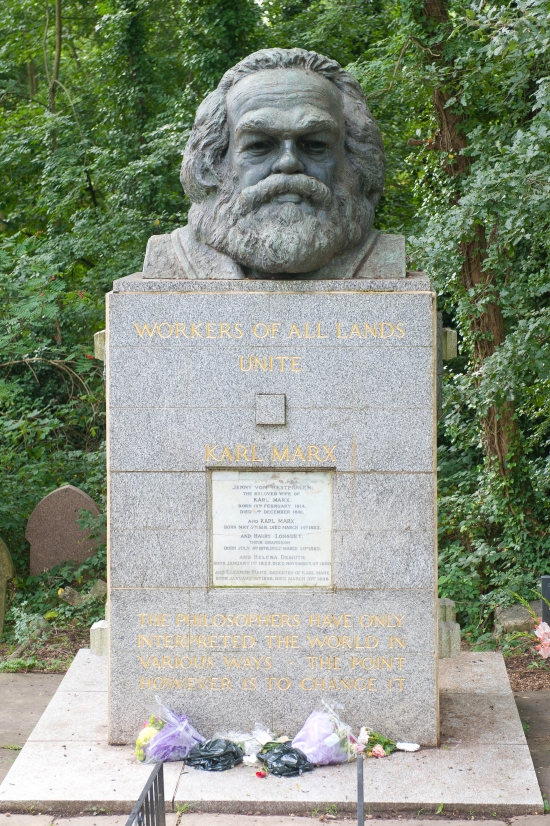
The grave of Karl Marx


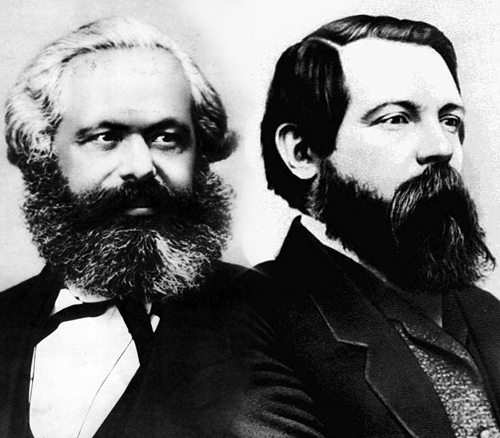
These were the closing remarks by Friedrich Engels at the funeral of Karl Marx in 1883. Engels could not have expected just how correct his statement would be. Following the collapse of the Stalinist dictatorships in the early 1990s and the restoration of capitalism in Russia and Eastern Europe, and the opening up of capitalist production in China, we faced an entire period where we saw the throwing back of socialist consciousness.

The bourgeois declared the communist society envisioned by Marx to be a pipe-dream. Any effort to change society through the independent action of the toilers was a pointless endeavour that could only lead to even greater repression. Capitalism was the best that humanity could hope for, summed up by the economist Francis Fukuyama that we had reached “The end of history”. There was no socialist future.

This propaganda sank into consciousness of the masses and support for socialist ideas were thrown back enormously for a whole historical period. This was aided by the hollowing out of workers parties around the world as parties that had embraced social democracy, moved to an all out pro capitalist position, summed up by Tony Blair ditching Clause 4 from the Labour Party constitution which committed the party to common ownership of the economy.

With the crisis which began in 2007/2008, and the following decade of austerity, low growth and wage repression on an unprecedented scale, these bourgeois ideas are being burned out of the consciousness of the working class, particularly the advanced layers. People are becoming more open to socialism as an alternative to capitalism. As Engels predicted, Marx has lived through the ages and the sales of both the Communist Manifesto and Capital Volume 1 have soared, as workers and youth seek answers on what is necessary to fundamentally change society.


Marx spent many years labouring over his economic works in painstaking detail, often completely changing whole sections multiple times before it satisfied him. This had its benefits in the sense that it meant that there was a level of clarity that was completely missing from Marx’s opponents. It also meant however that Marx would ultimately die before he would see the publication of much of his important works, most notably Capital Volumes 2 & 3.

After Engels finished his speech in Highgate Cemetery, he knew he had to get down to work. Engels was the man who had made it possible for Marx to spend such a period writing these works, sending Marx sums of money to support both himself and his family. He would not let his investment go to waste. He owed it to his life-long friend and collaborator, and he owed it to the working class movement to ensure that Capital Volume 2 & 3 saw publication.

Did Marx steal his Theory of Value?

Johann Karl Rodbertus

Immediately following Marx’s death, the socialist Rodbertus had begun to make the claim that Marx had stolen the labour theory of value from an earlier work written by himself. Engels could not let such rumours linger within the German socialist movement. In the introduction to Capital Volume 2, Engels was at pains to show that Marx developed his theories independently of Rodbertus, with much of his work being completed before ever reading the economist. Not only had Marx independently drawn these conclusions, his law of value sketched out in Capital was superior in every way to that of Rodbertus.

The labour theory of value did not originate with Marx. Adam Smith and David Ricardo both had their own labour theory of value prior to Marx, and it was these theories that he developed in Capital and drew out their revolutionary conclusions.

Whilst Marx himself argued that there was much good in Rodbertus’ work, it barely offered an advance over the theories of Ricardo. It offered an advance for the German socialist movement to draw out some socialist conclusions flowing from Ricardo’s work, however such theories were already the stock in trade of the utopian socialists in Britain. There was little new therefore in Rodbertus, if anything the whole debacle around plagiarism only exposed how ignorant German socialism was of the the writings of Ricardo.

In order to explain how Marx’s theory of value is superior to that of Rodbertus, Engels drew an analogy with the outdated theory of phlogiston. This was a mysterious chemical element that apparently separated from a burning body during combustion. Whilst this theory allowed for some scientific advances, ultimately the theory was rooted in mysticism and was superceded by oxygen. Upon discovering oxygen, Joseph Priestley described it as “de-phlogisticated air”, and swore by phlogiston to his dying day, remaining a prisoner of the theories that had gone before.

It was similar with Rodbertus, although he was by no means the first to discover surplus value. Rodbertus understood the various forms that surplus value takes, profit, interest, rent. He therefore picked one of these categories – rent – and made this the name for his general category of surplus value. So despite the hot air about Marx plagiarising Rodbertus, Engels demonstrates with some precision that Rodbertus remained a prisoner to the concepts of value as they were handed down to him by Smith and Ricardo. Marx with his theory of surplus value was able completely revolutionise classical political economy. History has largely forgotten Rodbertus.

The Third Volume of Capital – Engels, a loyal editor.

Whilst Engels completed the editing of Capital Volume 2 within 18 months, he would spend much longer editing Volume 3. The Third Volume of Capital only appeared in 1895, almost ten years after the publication of Volume 2, and less than a year before Engels’ death.

The reasons for this are varied and complex. Engels even in his twilight was still an active participant within European Social Democracy. He would spend many hours corresponding with his contemporaries and keeping up to date with the latest developments within the various sections of the Second International. Engels’ eyesight was also deteriorating by the 1890s reducing his reading time. Another major factor was that whilst Marx had largely finished Volume 2 of Capital, Marx’s draft manuscript for Volume 3 was more patchy, some chapters containing merely a title. This meant that Engels had to spend an extraordinary amount of time editing the work. Despite this, Engels work as editor was painstaking to ensure that the final book was a work that was as true to Marx’s original manuscript as possible, where the passages were too incomplete. Engels turned to other relevant writings by Marx on these questions. He also ensured that all additions by himself were added when only necessary and always put in parenthesis with his initials.

Because much more editing was required for the publication of Volume 3(amounting to over 80 pages written by Engels), this had lead some who ultimately reject much of the content of this work to conclude that it was a project whereby Engels had thrown together a bundle of notes that had little relation to Marx’s real intentions for Volume 3. What an insult! Here we have a man who spent the last decade of his life painstakingly trying to put together a work which held true to the aims of his lifelong collaborator, only for some to denounce it as the world’s longest scrapbook! Engels commented that he could have gone down that road, however that would have ultimately meant that he ; “would in the end have produced something that would nevertheless not have been a book by Marx”.

Not until its publication in German in the 1990s would we know fully to what extent Engels’ work varied from Marx’s manuscript. Michael Heinrich, a German academic, argues that what Engels produced bore very little relation to Marx’s original manuscript. With the publication of the original manuscript in English in 2015, we can see that this claim holds little water. In the introduction to the work, Fred Moseley makes a convincing case that Engels stayed as true as possible to Marx’s original manuscript, with changes being largely stylistic.

Not only did Engels commit himself to ensuring that this was as far as possible a work by Marx, he took ideas which Marx had only touched upon and developed them. This is important in relation to what Engels calls “simple commodity production”, which Moseley takes exception with. To understand this concept, some knowledge of Marx’s method in Capital is required.


Marx’s method in Capital, and Engels’ important contribution

Engels worked like a horse as editor to ensure the working class had the opportunity to read Marx’s capital in its entirety.

In Capital Volume 1, Marx argues that the value of a commodity is determined by the amount of human labour time required in its production, expressed in its price. In other words, price is equal to value. Marx even at this point knew that this was not how capitalism operated in the real world, with the prices of commodities fluctuating considerably above and below their labour content.

Marx wrote extensively on the relation between price and value. However, his published writings on the matter amounted to four paragraphs, which seemed to produce more heat than light within the developing socialist movement. The rest was in his study, and Engels would have the Herculean task of collating these notes

The assumption made by Marx in Volume 1 is part of his method of abstraction. He begins not by analysing capitalism in terms of how it exists in currently in the actual world, but the simple exchange of commodities. Starting with the commodity, he moves on to analyse money, labour power, constant and variable capital and so on. Later in the books he brings in his concepts of primitive accumulation of capital through the displacement of large swathes of rural peasants into the emerging cities. He assumes through all of this that price is equal to value, only in volume 3 is this corrected. It is important to keep in mind that Capital is not merely a dry economic textbook, but a rich work of historical materialism as well. Marx’s method is therefore primarily a logical one, but it is not merely a theoretical tool, it is also a historical method. The various levels of abstraction employed throughout the work reflect capitalisms real march of development, even if this is not always clear. As Engels explained, you cannot understand Marx’s method in Capital without understanding that we are dealing “not only with a purely logical process, but with a historical process, and its explanatory reflection in thought, the logical pursuance of its inner connections.”

Engels argues in the supplement to Volume 3 that the law of value that Marx sketches out in capital Volume 1 holds true to conditions in which independent producers exchange their own products. This holds true for all societies in which exchange took place. With the emergence of capitalism, this process underwent a transformation. The industrial revolution led to commodity exchange, and thus the law of value becoming for the first time in history, generalised across the whole of society. The production of surplus-product under feudal relations was transformed into the production of surplus-value.

Marx explains in Theories of Surplus Value that with the emergence of labour power as a commodity(ie, with the development of the industrial working class), “something new occurs, apparently (and actually, in the result) the law of value changes into its opposite”. As Marx notes, economists like Adam Smith had long observed this contradiction but could not resolve it.

Competition between capitalists leads to firms seeking to ruthlessly exploit their workers more than their competition to keep ahead. These varying rates of exploitation resulted in a tendency towards an equal rate of profit and commodities exchanging not at their labour values, but at “prices of production”, cost price+average profit. Whilst this might not seem important, Marx and Engels both argue that this lays the basis for the ability of some capitalists to gain extra surplus value over and above the value of their commodities. In short, it redistributes surplus value among the capitalist class themselves, with super profits flowing towards the most productive capitalists.


Engels VS the Socialist Workers Party

Before the rise of capitalism, independent producers would exchange the products of their own hands produced in small workshops and farms. Under these conditions commodities would exchange at their approximate labour values.

Amongst academic commentators, this idea of simple commodity production has proven unpopular. Most of these criticisms originate with I.I. Rubin, a Menshevik writer who went on to work under the Bolshevik economist Riazanov from 1926 onwards. Stalin had held a grudge against Riazanov after the latter humilated Stalin in a party discussion. Stalin had began to make a contribution to the debate around trade unions in the Soviet state in the early 1920s, to which Ryazanov responded by pleading with his old friend “Koba” to not make a fool of himself by talking like a theoretician, as everyone knew that theory was not the bank robbers area of expertise. Riazanov and Rubin both went on to die at the hands of Stalin’s gangs on trumped up charges of “Trotskyism”.

Rubin’s book contains many interesting parts, such as his close attention to Marx’s theory of commodity fetishism which is often ignored by more orthodox commentaries on Capital, and in some cases, dismissed as gobbledeguck. Rubin was one of many young revolutionaries and workers in the aftermath of the Russian Revolution who seriously attempted to grapple with Marx’s ideas in Capital, and overcome the baggage that the third international had been handed down through the theoretical mistakes of the leadership of the second. Despite this, his criticism of simple commodity production represent a misunderstanding of Marx’s method. . Many of his ideas were later picked up on by the New Left who sought at all costs to separate out the ideas of Engels from the ideas of Marx.

One notable adherent of Rubin’s position is the current leading member of the Socialist Workers’ Party, Alex Callinicos. In his rather insightful book “Deciphering Capital”, he gives Engels a fairer treatment than most of his academic colleagues would, and avoids a lot of the common attacks on Engels editorial work on Capital. However, he takes exception to the idea of simple commodity production. For Callinicos, the law of value as its sketched out in Volume 1, is purely a tool of abstraction, resulting from Marx’s turning of the Hegelian dialectic “on its head”. This is part of the truth, but it is a one sided interpretation of Marx. For Marx, the historical importance of the law of value was clear;

“The exchange of commodities at their values, or approximately at their values, thus requires a much lower stage than their exchange at their prices of production, which requires a definite level of capitalist development…. Apart from the domination of prices and price movement by the law of value, it is quite appropriate to regard the values of commodities as not only theoretically but also historically antecedent (prius) to the prices of production. This applies to conditions in which the laborer owns his own means of production, and this is the condition of the land-owning working farmer and the craftsman, in the ancient as well as in the modern world.”

As Engels pointed out, Marx would have likely developed this point considerably had he finished Capital, he even at one stage planned a 4th volume focusing on the “literary-historical” emergence of capitalism. He argued this would have been the easiest, as he had already sketched out the process across the three volumes. Therefore, the law of value is not specific to the capitalist mode of production, the law of value manifests as soon as members of different primitive communities exchange goods through barter. It is only with the emergence of capitalism that the law of value becomes the general law governing all of production exchange and distribution within a society. But with its generalisation, and the redistribution of surplus amongst competing capitalists, the law of value becomes obscured, leading in many cases to substantial deviations between price and value. This was important for revolutionaries such as Lenin, Trotsky and John Maclean in explaining the rise of monopolies and trust prices. 

Just an abstraction? The case of the Duck Billed Platypus

This idea that the law of value is merely a “necessary fiction” that one must employ in order to understand the actual nature of capitalist production is not a new one.Prior to the release of Capital Volume 3, Engels had challenged those economists and individuals with the social democratic movement to put their ideas on paper regarding the problem of the transformation of labour values into prices of production. In the process, he showed how poorly understood the law of value actually was amongst his contemporaries. One entry came from an associate of Engels, Conrad Schmidt. Whilst Engels critiqued elements of Schmidt’s work, he also had much to praise on his writing in the rate of profit, and the distribution of surplus value amongst the different sections of the ruling class. Schmidt, in many ways, had independently  drawn the same conclusions as Marx. Engels said that he stood head and shoulders above other entrants.

Schmidt gave volume 3 a glowing review in the Social Democratic press, heaping praise on Engels. Privately, he wrote to Engels expressing similar concerns to those of Callinicos. Schmidt’s theoretical confusion led quickly to him acting as  a theoretician of the right wing within the SDP, fighting the left of the party at every turn. Engels was always one to draw upon analogies with the natural sciences to explain complex economic ideas, and this case was no exception. He warned Schmidt against a tendency which he thought was rooted in Schmidts academic background, a tendency to view reality in fixed categories. He explains that in his youth he had seen the eggs of a duck-billed platypus and had scoffed at the idea of such a creature. As if a mammal could lay eggs? But mammals as a biological category do not come from nowhere, mammals emerged historically from evolution within the reptilian world. Darwin’s work made this clear to Marx and Engels.

The process of evolution brings both concepts of mammal and reptile into conflict with each other. The platypus is the proof of this. Both the reptilian and mammalian features struggle against each other. Likewise, a spider is clearly an arthropod, yet scientists have recently discovered spiders with the mammalian trait of being able to breastfeed, yet have not yet made the leap into the category of mammal. This is perhaps a clearer analogy with simple commodity production, commodity exchange existed in the neuks and crannies of feudal society, yet had not established its dominant position. The duck-bill likewise has not yet cast off all of its reptilian baggage, yet it is clearly not a reptile. As Marx makes clear in Critique of the Gotha Programme, in the transition between capitalism and communism, society carries much of the baggage of class society, and the law of value, and all other features of capitalism are not done away with in one fell swoop. Engels reply to Schmidt has proved useful in helping Marxists to understand the class nature of states such as China, where the capitalist mode of production dominates, yet the Stalinist Communist Party still exert a powerful influence over the economy through a large state sector and nationalised banking. Their control over the economy goes far beyond the power of other bourgeois states.


Simple Commodity Production in Capital volume 1.

Whilst Engels gave name to simple commodity production, we can already see this process in historical outline in Capital Volume 1, chapter 33, The Modern Theory of Colonisation;

“Political economy confuses on principle two very different kinds of private property, of which one rests on the producers’ own labour, the other on the employment of the labour of others. It forgets that the latter not only is the direct antithesis of the former, but absolutely grows on its tomb only.”

Of particular importance to Marx here is the position in North America, where the abundance of available land meant that the bulk of the population were small producers, and only one tenth of the population could be described as wage-labourers. This was in stark contrast to Britain at the time where much of the population had been reduced to the status of proletarians. North America had the peculiar position of having elements of every mode of production in human history existing on one continent. Slavery existed, as did elements of feudalism, alongside millions of indigenous primitive communists. As Marx notes, the Civil War massively increased the concentration of capital. The rise of capitalism in North America can be characterised as a violent political struggle against every mode of production to ever exist, including struggle against the class of small commodity producers. Marx was absolutely clear on this point;

”…the capitalist regime everywhere comes into collision with the resistance of the producer, who, as owner of his own conditions of labour, employs that labour to enrich himself, instead of the capitalist. The contradiction of these two diametrically opposed economic systems, manifests itself here practically in a struggle between them. Where the capitalist has at his back the power of the mother-country, he tries to clear out of his way by force the modes of production and appropriation based on the independent labour of the producer. The same interest, which compels the sycophant of capital, the political economist, in the mother-country, to proclaim the theoretical identity of the capitalist mode of production with its contrary, that same interest compels him in the colonies to make a clean breast of it, and to proclaim aloud the antagonism of the two modes of production.”


Engels the Economic Determinist?

Callinicos also argues that for Engels, the transition from feudalism to capitalism can be explained in purely economic terms, whereas Marx in volume 1 focused extensively on the violent political struggles that accompanied capitalism’s genesis. This attempt to paint Engels as a crude economic determinist is undoubtedly one of the weakest arguments of Callinicos with very little evidence to support such a suggestion. To support his argument, he quotes Anti-Duhring.

”The whole process can be explained by purely economic causes; at no point whatever are robbery, force, the state or political interference of any kind necessary.”

Duhring was, like Callinicos, an academic professor at a university. The anti-Marxist ideas that he propagated gained an echo in the German Social democratic movement. Engels was challenging Duhring’s notion that political struggle determined the course of economic development. Engels highlighted the absurdity of such an idea. Rapid development of the means of production whilst the old feudal political systems stagnated characterised capitalism’s rise. The violent revolutions and the bloody primitive accumulation highlighted by Marx did not develop in a vacuum, but were driven by the need to expand capital beyond the narrow limits of the feudal political order. The economic base of society determines the political superstructure, politics is simply “concentrated economics”. But Engels and the CWI both reject the notion of crude economic determinism where the political superstructure of society doesn’t have economic implications.

It is absurd to suggest a fundamental difference between Marx and Engels on the question of historical materialism and the birth of capitalism. First, Engels completed Anti-Duhring before the death of Marx. It was hailed as a milestone in the development of scientific socialism(it was later abridged into socialism: utopian and scientific and actually outsold the Communist Manifesto for a period). Engels was eager to hear Marx’s view on the work, and as legend has it read the entire piece aloud to him verbatim to ensure that there was no fundamental difference in approach. Marx gave the work his seal of approval, he even contributed massively to the section on economics.

If Callinicos is correct that there is a fundamental difference between Marx and Engels on this issue, several questions must arise: why did Marx not challenge him? Why would he have given the work his seal of approval? Why would he have trusted Engels to undertake the editorial work of volumes 2 & 3 if any so-called fundamental difference existed? We can only conclude that there was no fundamental difference in this question.

“Supporting Engels in Writing Anti-Dühring” painting by Ding Yilin [丁一林], PRC, 2018

Engels against “Economic materialism”

Engels views on the relationship is perhaps best explained by delving again into the treasure trove that is his correspondence with Conrad Schmidt. Engels was increasingly bothered with false perceptions of materialism that were gaining traction amongst German Social Democratic youth. This could best be described as “Economic materialism”, where all political developments flowed from the economic base. Engels explains in great detail to Schmidt how crass such an approach is and how it could not be further from the method of Marx, or himself;

“If therefore Barth supposes that we deny any and every reaction of the political, etc., reflexes of the economic movement upon the movement itself, he is simply tilting at windmills. He has only got to look at Marx’s Eighteenth Brumaire, which deals almost exclusively with the particular part played by political struggles and events; of course, within their general dependence upon economic conditions. Or Capital, the section on the working day, for instance, where legislation, which is surely a political act, has such a trenchant effect. Or the section on the history of the bourgeoisie.  Or why do we fight for the political dictatorship of the proletariat if political power is economically impotent? Force (that is state power) is also an economic power….What these gentlemen all lack is dialectic. They never see anything but here cause and there effect. That this is a hollow abstraction, that such metaphysical polar opposites only exist in the real world during crises, while the whole vast process proceeds in the form of interaction (though of very unequal forces, the economic movement being by far the strongest, most elemental and most decisive) and that here everything is relative and nothing is absolute – this they never begin to see. Hegel has never existed for them.

Unfortunately these letters remain a closed book to most of the petty bourgeois critics of Engels who argue that he rejected Marx’s materialist conception of history in favour of a crude mechanical approach. Unfortunately they also remain a closed book to the self described vanguard of the vanguard – the SWP leadership!

Workers, Read Capital!

Callinicos argues that his views are shared by “virtually every contemporary commentator on Capital”,with some exceptions, such as Michael Roberts, this is undoubtedly true. That does not make these criticisms of Engels correct however. What this does highlight is that despite being the leader of the Socialist Workers Party – an organisation claiming to stand in the traditions of Marx and Engels – Callinicos is quite prepared to throw up straw men, to create differences between these two giants where no differences exist. Whilst there are many sincere working class revolutionaries in the SWP, there has historically been a tendency to draw their leadership from the ranks of the intelligentsia. Marx and Engels were both intellectuals, neither were of proletarian roots. However, they both never feared breaking from the standpoint of bourgeois and petty bourgeois academia in defence of the fundamental ideas of scientific socialism. It is unfortunate that Callinicos is not prepared to break from the dominant petty bourgeois interpretations of Marx and Engels writings. Just like Rodbertus remained a prisoner of the categories of value as developed by Smith and Ricardo, Callinicos remains a prisoner of the interpretations of Marx handed down to him by his contemporaries.

Marx never intended for Capital to be reserved for academics to squabble over. Marx’s biggest concern when writing Capital was to make it accessible to the working class. He therefore praised the efforts in France to release the work in a serialised form, making it easier for workers to study and digest. With the same considerations in mind, revolutionaries like John Maclean ran a series of lectures on Marxist Economics. This was not done to pontificate with the petty bourgeois, but to raise the level of shop stewards on the Clyde, to prepare them for the coming struggles and to explain the necessity of struggling for socialism.

With these considerations in mind, Young Socialists – Young Workers Rights Campaign will be publishing abridged editions of Capital 1-3 complete with study guides for each chapter. For us, just as for Maclean 100 years ago, we seek to educate the working class in the fundamental ideas of Marxism, and to develop a steeled, industrial youth cadre to take our ideas and programme out to the masses. As the great socialist theoretician and industrial worker, Joseph Dietzgen, wrote in a review of capital volume 1:

”For my part – if I might be permitted to introduce myself as a tanner – when at the start I could not understand the work of our philosopher, I kept saying to myself: what others can do, you can do too. Thinking is not a privilege of the professors.”

“Just like any other job, it just needs the usual practice. The great mass of workers is finally beginning to understand: that there is no salvation without practising thinking for oneself. In our class, we are generally now starting to realise that if we still let others tell us what they wish to let us know, they will know how to make material booty out of that intellectual advantage. The first necessity for a worker who wishes to work for the self-emancipation of his class is not to allow himself to be told, but instead to know himself. The particular, the individual, the special we can leave to experts. But a knowledge of capital, our powerful common enemy in the social struggle, is a general class interest that each of us has to take on.”

Conclusion

Summing up Engels contributions to political economy would take a whole book in itself. Marx once commented that Engels was always one step ahead of him. His Condition of the working class in England and other economic works laid the basis for the theories which Marx would go on to develop. Engels even coined important phrases such as “fictitious capital”, describing the ever more relevant trend towards investment in stocks, bonds and other financial assets. Engels was a political economist in his own right. Karl Kautsky and others in the second international considered him to be the greatest living political economist. This was a correct assessment, but Engels was always too modest to accept the title. Any attempts to draw a line between Marx and Engels on fundamental questions of theory will always fall flat on their face. For any worker attempting to understand the nature of Marx’s theory of surplus value, Engels introductions and supplements to Capital will continue to prove a rich resource which not only defends, but deepens the understanding of value theory beyond Marx.

References

Callinicos, A. (2014). Deciphering Capital : Marx’s Capital and its destiny. London: Bookmarks Publ.

Dietzgen, J. (1868). A worker-socialist reviews Capital. Available at: https://www.workersliberty.org/story/2018-05-08/capital-marx-review.

Engels, F. (1883). Frederick Engels’ Speech at the Grave of Karl Marx.

Engels, F. (1976). Herr Eugen Dühring’s revolution in science (Anti-Dühring). New York, Ny: International Publishers.

Marx, K. (1990). Capital : a critique of political economy. Vol. 1. Harmondsworth: In Association With New Left Review.

Marx, K. (1991). Capital : a critique of political economy. Vol. 3 … Penguin.

Marx, K. (1992). Capital : a critique of political economy. Vol. 2. London: Penguin.

Marx, K. (2000). Theories of surplus value : books I, II, and III. Amherst, N.Y.: Prometheus Books.

Marx, K. and Engels, F. (2004). Karl Marx, Frederick Engels : collected works. Vol. 50 Engels: 1892-95. London: Lawrence And Wishart.

Marx, K. and Engels, F. (2010). Karl Marx, Frederick Engels Collected Works Volume 49, Letters, 1890-92. London: Lawrence & Wishart.

Hip-Hop and the struggle for socialism.

An unpublished article originally written in 2017 for the Bad Art collective.

Since it first emerged in the 1970’s, hip-hop has always been surrounded by controversy. When the film Straight Outta Compton was released in 2015, the film came under rightful criticism for some for omitting parts of the history of NWA, such as the the brutal attack of journalist Dee Barnes at the hands of Dr Dre. Now a respected member of the capitalist class – with an estimated net worth of $550 million – Dr Dre would rather this part of his past were swept under the carpet. The “apology” that Dr Dre issued was more out of concern about shareholder confidence than about the permanent damage he inflicted upon this young woman.

Violence against women is a common theme in hip hop. Eminem once said that he “Built a monopoly, off of misogyny”. You do not have to look far to find rampant sexism, homophobia or the glorification of gang culture. However, the culture is also closely associated with artists who use their platform to challenge poverty, racism, police brutality and senseless violence in black communities. Rappers such as Talib Kweli were on the frontlines of the struggle in Ferguson and elsewhere. Rap has been taken up by youth in Palestine, Egypt, South Africa and elsewhere as a means of challenging oppression though art. How did these contradictions come about? To answer that we have to look at how hip-hop was born.

The post-war boom

To understand how this community emerged, you must look at the political and economic situation during the period . For much of US history, blacks were concentrated in the south as a result of slavery. In 1944, Roosevelt signed the G.I. Bill. This provided a range of benefits for returning World War II veterans . Benefits included low-cost mortgages, low-interest loans to start a business, cash payments of tuition and living expenses to attend university, as well as one year of unemployment benefits.

This was in the context of an expanding US imperialism which had been strengthened by the war. Capitalist profitability had recovered meaning that more concessions could be to the working class which had shown its militancy throughout the course of the preceding period. This was a contributing factor to the so called American middle class of the 50’s and 60s. However, only 2.1 percent of the funds available went to African Americans. In New York – where hip hop originated – large housing projects were being thrown up, rows of practically identical multi storey blocks.

As more blacks migrated north and started to fill up these housing projects, you had white flight taking place. In places like Harlem, the Italian community largely moved elsewhere. Similar processes took place in Brooklyn, Queens and the wider city. You had the development of the impoverished ghettos that we hear about from hip-hop artists.

Queensbridge housing projects under construction

An era of struggle.

Leading up to the 1970’s, the political situation around the globe was explosive. Martin Luther King had been assassinated for his role in the civil rights movement. Malcolm X was also murdered for his militant stance in defence of black communities. Huey Newton and Bobby Seale formed the Black Panther Party in 1966. They promoted organised self defence against police brutality, as well as community based programmes such free breakfasts for children. They were referred to as the U.S.A biggest internal threat by the head of the F.B.I. – J Edgar Hoover.

They faced mass infiltration, jail sentences and in some cases outright murder of their leaders. Fred Hampton the Chairman of the Chicago Panthers was murdered in cold blood by the police as he lay sleeping, with his pregnant wife next to him. It is important to remember that the primary reason for the state repression the Panthers faced was not down to race alone. Many black nationalist groups faced nothing like the same levels of repression. The Panthers were targeted because they were the most serious, the most organised, and most importantly they were armed with a programme that threatened capitalist property rights, a programme that posed socialist demands, as well as political demands for the right to self-determination.

You had the struggle against US imperialism taking place in Vietnam. But in response to that, you also had the important anti war movement in the US. As well as Vietnam, there were revolutions and anti colonial struggles taking place globally over the preceding period from Algeria, to China to Cuba. We also had the revolutionary struggles break out in France in 1968. Unfortunately the Communist Party did not use their social weight to carry that revolution through to its conclusion. All of these factors led to a radicalisation taking place within important sections of US society.

The Black Panther Party

New York in the 1970s.

As the post war boom was drawing to a close, black communities across the US were being hit hard. If we look at South Bronx where hip-hop began, 600,000 manufacturing jobs; 40 percent of local industry disappeared. By the mid-seventies, average per capita income dropped to half of the New York City average and 40 percent of the nationwide average. Youth unemployment rate hit 60 percent. Locals maintained that the level was in reality closer to 80%. You also had landlords in South Bronx paying gangs to burn down tenements in order to collect insurance money. Around 30% of New York’s Hispanic households, and 25% of black households were at or below the poverty line.

At the same time you had urban renewal programs were taking place. This fuelled white flight and led to a subsequent capital divestment from the city. The Cross Bronx Expressway cut directly through the most heavily populated working class area of the Bronx, tearing apart a 60,000 strong community. This was nothing short of segregation of poor and working class blacks and Latinos.

New York gangs.

Gangs played a big role in New York City life in the 70’s. As the civil rights movement dissipated, street gangs in some sense filled a social void for many young blacks and Hispanics, giving them a sense of community and collective purpose. I do not wish for one second to excuse any of the violent acts carried out by these groups, it would be a mistake however to look at all New York gangs in this period as being organisations defined by violence alone. The Young Lords for example started as a street gang but through their contact with Black Panthers in New York and Chicago, transformed into a fighting organisation influenced by Puerto Rican nationalism, anti-imperialism and Stalinist ideas. Gangs were also sometimes known to organise against budget cuts that impacted garbage pickups and other vital services.

After a period of escalating gang violence and murders in 1973, there was an agreement following a conference of all the gangs in the city to have a peace treaty. A recognition that black on black or black on brown violence was only furthering the problems in these communities, and that there should be unity to fight for better social conditions. This was ground breaking and had big cultural implications. This meant that in the Bronx, people were more likely to mix with people from other blocks and neighbourhoods. Bronx residents have testified that following this there was a more accepting attitude towards blacks dating Hispanics. A short time before, this could have lost someone their life.

Hip-Hop is born

The culture that developed out of this laid the basis for what we would now understand to be hip hop culture. What did this movement comprise of? If you ask 100 hip-hop fans to define the culture, you could get 100 different answers. Debates rage to this day over what is and isn’t legitimately part of the culture. Going back to the basics of what was being done in the South Bronx at that time it becomes easier to break down.

At the time you had attacks on education. Where you once had programmes allowing black and Hispanic youth to take music and other artistic classes, this had been cut back, some schools were shut down. Despite this, many would seek to make music and art with what they had at hand. In the absence of musical instruments, you had the development of turntablism – the form of DJing most commonly associated with hip-hop – in the South Bronx. Using turntables to imitate and create sounds through scratching records and other techniques. This was popularised by the likes of DJ Kool Herc and Grandmaster Flash at the house parties they would throw. As these house parties grew in popularity, block parties quickly emerged allowing more people to be accomodated.

Break dancing, or B-Boying, provided an outlet for youths to engage each other in peaceful competition helping towards efforts to end inter-community violence. At the same time these young pioneers were developing this new creative form of dance which would gain worldwide popularity in years to come.

The cultural centre for graffiti art had shifted from Philadelphia to New York by the early seventies. The subway carriages became the canvas that many youth used to express themselves. Helping to create the iconic images of New York in that period.

Rapping – or emceeing – encouraged people to take up poetry and lyricism and talk about the frustrations of living in conditions of absolute poverty and degradation.

As hip-hop grew in popularity throughout black and Hispanic communities in New York, DJs from the Bronx started performing in the Manhattan clubs to largely white crowds. This was massively successful as white audiences loved this new style of music. In 1979, The Sugar Hill Gang released the hit single Rappers Delight, introducing hip hop to audiences around the world.

Socially conscious hip-hop

In the early 1980’s, Grandmaster Flash released The Message which spoke about deteriorating social conditions for people of colour in New York. The lyrics may seem pretty tame by today’s standards, nonetheless it was one of the few examples of music in the mainstream at that time talking about social problems facing black communities. The gritty lyrics and DIY approach of the hip-hop scene naturally appealed to many punk rock artists. Joe Strummer was full of praise for hip-hop, even incorporating some elements into the Clash song The Magnificent Seven. Debbie Harry (in)famously rapped a verse in “rapture”. Groups like the Beastie Boys transformed from a group of punk rockers to a legitimate hip hop group in their own right.

During this period there was an increase in violence and crime within black and hispanic communities as social conditions continued to worsen. When violence broke out at various rap venues in New York in the late 80’s, the hip-hop community was quick to respond with the “Stop the Violence Movement”. This consisted of many prominent artists including Queen Latifah, KRS-One and MC Lyte.

The artists urged black youth to stop the senseless violence and unite to fight against police repression and for better social conditions through struggle. This was carrying on the tradition through which hip hop was born through the efforts to end gang violence in the 70’s. The lyrics of the benefit single, “Self-Destruction”, posed the issues in a very direct way; “in the 60’s our brothers and sisters were hanged, how can you gang bang? I never ever ran from the Ku Klux Klan and I shouldn’t have to run from a black man”. They correctly pointed out that the inter-community violence taking place, directly into the hands of the ruling class who were seeking to further criminalise black and brown youth.

Public Enemy were breaking new ground with their militant black nationalist lyrics and striking fear into the heart of conservative establishment with their Black Panther influenced imagery. The two records they released during this period were “It Takes a Nation of Millions to Hold Us Back” and “Fear of a Black Planet”. Throughout these albums they consistently deal with the reality of racism in America as well as point out how the police are acting in the service of the ruling class when they brutalise black youth. They rightly attack the media as another tool of the capitalist class to further racist prejudice in society. Their militant message was on full display in their most famous song “Fight the Power”. Other artists such as KRS-One were taking a similar stance.

Gangsta Rap

Around the same time you had the likes of NWA and ICE T and the development of Gangsta rap. This was more popular on the West Coast at this stage but was heavily influenced by other artists from the East. Many of the themes present in gangsta rap are concerning. Socialists don’t promote misogyny, homophobia or senseless violence. However, this sub-genre of music should be viewed within the political and economic context that gave birth to it. A common feature is a hatred for the police, often talking of murdering cops. This was at a time when you had increasing levels of police brutality against blacks and Hispanics.

At the same time, the Drug Enforcement Agency were ramping up the so-called War on Drugs, under the directive of arch-reactionary, Ronald Reagan. Tanks roamed the streets of communities like Compton destroying homes of suspected drug dealers, with Nancy Reagan in the passenger seat. Black youth were being sent to jail for years for drug related offences and other petty crimes. Many black youth correctly understood that every wing of the state was being mobilised to terrorise some of the most impoverished communities in the country. There was tension building over a period of time between the forces of the state and communities of colour. This would come to a head with the beating of Rodney King, and the L.A. Riots which followed the acquittal of the police officers who brutalised him. The L.A. riots should be viewed fundamentally as an uprising against institutionalised racism, poverty and degradation. The tragedy in this case was that no political organisation existed that was capable of harnessing this anger in a positive direction and uniting the working class to fight against the racist capitalist system.

While song like Fuck Tha Police by NWA or Cop Killer by Ice T have a crude message at best, they reflect the anger and frustrations of black and hispanic youth at that point in time. Which continues until today. This is shown by the Black Lives Matter, the movement against police murders.

Sexism and Censorship

As these artists became more successful, they became the target of capitalist politicians. Many of these politicians were of a conservative, Christian orientation, but it was not confined to the ranks of the Republican Party. Many Democratic politicians were just as quick to condemn hip-hop and call for bans and censorship. Tipper Gore led the charge against lyrics deemed to be offensive.

As previously stated, throughout a lot of hip hop there reactionary sentiments that socialists would not endorse. Despite this, socialists defend the rights of these artists to freely express themselves without fear of repercussions from the state.

If we were to give the state the power to ban certain types of art that representatives of the ruling class deem to be offensive, we would be giving them a blank cheque to ban and censor art that puts forward radical messages. In countries where there is more state restrictions on freedom of expression, it is always artists from the labour movement and those who challenge oppressive regimes who are at sharp end of state repression.

It also has to be said that the efforts of these morality crusaders to paint rap as responsible for the social problems in black communities was an attempt to deflect blame from the ruling class who had been carrying out savage neo-liberal policies over the previous period. Often hitting blacks communities the hardest and creating the conditions for crime levels to grow. The choice of words of rappers were often criticised. Take the common use of the sexist term “bitch” in hip hop. Rappers were said to be degrading black women by using this term. That is certainly true. However the widespread use of “bitch” as a derogatory term aimed at black women was adopted long before Snoop Dogg came on the scene.

The pseudo-science of racism was developed to justify the horrors of slavery. Blacks were seen and treated as sub-human, reduced to the status of livestock. The slave owners used a wide range of tactics to re enforce this idea. Calling black female slaves by the same terminology reserved for dogs was part of that. Their children were referred to as pups. This was the system that Tipper Gore’s party fought a war to defend.

Those establishment figures who railed against lyrics degrading women in rap have nothing in common with feminists and socialists who fight against sexism and the system that breeds it. Their concerns were based primarily on a defence of their reactionary concepts of “family values” and “modesty”. Artists from the feminist and LGBT communities were also targeted for “obscenity”.

There are however many artists who have challenged the misogyny and homophobia present in mainstream gangsta rap. One of the most famous examples would be the classic single U.N.I.T.Y. by Queen Latifah. Throughout the track she talks about the sexism that black women are subjected to in their own communities, highlighting street harassment and domestic abuse and demanding to know “Who you calling a bitch?”. This positive anti-sexist message was not confined to Queen Latifah, many other rappers have used their platform to challenge male chauvinism also. Many of these artists have often struggled to find a more mainstream audience. Where there are rappers who are putting forward messages that challenge misogyny and other forms of discrimination, socialists and the wider labour movement should support them where we can.

Sexism and homophobia are not something unique to hip hop. You will find sexism to one degree or another almost every time you turn on the radio. If you look at heavy metal, reggae, punk rock, pop or rock & roll, you will find sexism and homophobic lyrics spanning almost every genre. There is nothing fundamentally sexist about rap or any other form of music, but there is something inherently sexist about capitalist society. The entertainment industry commodified hip-hop and used it to promote the ideas of the ruling class.

Gangsta rap and big business

In the 1990s, there was a conscious policy by the big music companies to promote
gangsta rap. Particularly those artists talking about materialistic things such as, clothes, cars and jewellery. While Biggie Smalls had many songs dealing with the harsh reality of life for a black youth in Brooklyn, his biggest hit was “Juicy”. This is a fan favourite and a song I enjoy personally. It was still nonetheless a celebration of his new found wealth and success.

Many independent hip hop labels and radio stations were systematically bought over by big business which allowed them to control what was put out, and what would see that charts. It proved very profitable to sell this exaggerated vision of life in poor black communities to a growing white middle class fan base.

Massive profits were made off the backs of hip hop artists. These profits didn’t come from thin air, but through exploiting these artists. This was touched on in the film Straight Outta Compton. Ice Cube quit the group over a contract which he felt was ripping the artists off. Despite the album Straight Outta Compton selling over three million copies, he has only ever received around $30,000 for all of his work despite being the lead Emcee and lyricist on the album.

Copyright laws also made it harder for artists to get their music out. The practice of sampling which commonly used by hip hop DJs and producers came under attack as many artists were sued for using parts of songs made by others. Samples could be used in a lot of cases for a fee. The high fees artists were expected to pay meant that sampling became the reserve of the big record companies who could afford it. Many classic hip-hop albums which were heavily sample based – such as Three Feet High and Rising by De La Soul -. would be almost impossible to produce nowadays.

Many artists who at one point had a radical message, had to tone this down in order to further their career. Tupac Shakur’s early albums were highly political, talking about the social problems in ghettos as well as encouraging black youth to read the works of Black Panther leaders and Malcolm X – It was these sorts of messages that were always the real target of those seeking to censor rap. Compare this to his albums made after signing with Death Row records where misogyny and gross materialism were more prevalent.

Tupac Shakur’s debut album

The promotion of gangsta rap over political rap music was also part of a wider ideological drive by the capitalists following the collapse of Stalinism. The mouthpieces of the ruling class declared it was the end of history. There was no point struggling for better social conditions, capitalism was as far as society could go and there was no alternative to poverty and exploitation. While conscious rappers encouraged people to “change the hood”, gangsta rap spoke about escaping it.

The Harlem born rapper Immortal technique is correct when he says that the way that radical artists can find a mainstream hearing is through bringing the music and entertainment industries into democratic public ownership. This would mean that the music available on the radio and wider goes beyond what is deemed acceptable to those in the boardrooms.

Hip-hop has provided youth the world over with a means to fight back against poverty and discrimination, however you cannot change society through music and culture alone. Although art can be a very useful tool to transform consciousness and introduce people to radical and revolutionary ideas. Changing society would require building a strong labour movement and a party with a socialist programme. The Black Lives Matter movement is an important step forward in the struggle against racism and police brutality. It demonstrates that a new generation black youth are prepared to struggle.

Changing society means fighting for socialism

For these movements to be successful, they have to learn the lessons of the civil rights movement and the Black Panther Party. Many of the self appointed leaders within Black Lives Matter movement opted to support Hilary Clinton, the candidate of Wall Street, in the 2016 election. This was a foolish example of lesser evil-ism. Hilary was a vocal supporter of Bill Clintons 1994 crime bill which was largely responsible for the mass incarceration of blacks we have seen since. The Democrats carrying out policies that disproportionally target black and brown youth should come as no surprise. The Democrats despite being seen by some as a left party, are racist to the core. Historically they were the ones who fought and died to defend slavery. They were the party of Jim Crow. Despite their facelift in recent decades no fundamental transformation has taken place. They are a racist capitalist party as they always have been. It would be criminal for the energy of the new generation of black and brown youth moving into struggle was put into re-claiming something that never belonged to them or the working class more generally.

The task for socialists in the next period is to boldly argue for a new party that can represent all workers, regardless of race. Such a party would have to be prepared to struggle against all of the attacks coming from the Trump administration as well as Democratic politicians. Marxists within such a party would argue for the adoption of a socialist programme of free education, universal healthcare and an end to mass incarceration. It would also have to include measures that could radically transform society, such as the nationalisation of the commanding heights of the economy as well as the big banks under democratic workers control. This would allow for production to be planned to meet basic human need instead of the profits of the ruling class. Hip hop has long highlighted the poverty and discrimination that people face. Socialism is the only lasting solution to this misery.

Ted Grant’s Notes on Capital Volume I


‘The real limitation upon capitalist production is capital itself. It is the fact that capital and its self-expansion are the beginning and end, the motive and aim of production; that production is regarded as production for capital, instead of the means of production being considered simply as means for extending the condition of human life for the benefit of the society of producers’.

Commodities and money

A utility is a use value. One thing use values have in common is that they are ‘products of human labour’. Human labour in the abstract — a congelation of homogenous human labour. Labour is divided into time, day etc. The total labour-power of society is a homogenous mass with innumerable individual units — for with e.g. the invention of the power loom, the time taken by hand loom is double: labour therefore drops to half the value.

Value

The amount of labour socially necessary; ie. the labour time socially necessary for the production of a commodity.

Use-values for sale

Coat equals 10 yards of Linen. 10 yards of Linen equals W. Coat therefore equals W.‘Division of labour is the necessary condition for the production of commodities, but it does not follow conversely, that the production of commodities is a necessary condition for the division of labour’.There is a social division of labour. The use values are combinations of two elements: matter and labour. The value of a commodity represents human labour in the abstract — skilled and simple or unskilled labour. Skilled counts as a multiple of unskilled labour. Increased quantity of material wealth means a fall in value. The two-fold nature of labour — commodities have value and use value (e.g. chairs, shirts etc).

Relative value and equivalent value

The relative expression of value is incomplete, and is reflected in an interminable series.

The general form of value

One coat equals 10 Ibs of tea, 40 Ibs of coffee, 2 ounces of gold, X commodity A — expression in one commodity. Human labour constitutes its specific character

Universal equivalent

The particular commodity with whose bodily form the equivalent form is thus socially identified, now becomes the money commodity, or serves as money’

Social monopoly; Universal equivalent

Money could be cattle, copper, silver — gold becomes the accepted form: the General Form of Value — money form.“…the products of labour become commodities, social things whose qualities are at the same time perceptible and imperceptible by the senses. There it is a definite social relation between men that assumes, in their eyes, the fantastic form of a relation between things”. Analogy — religious world, man creates God in his own image. Commodities are the products of men’s hands.

Fetishism of commodities

The sum total of labour of private individuals forms the aggregate labour of Society. The active exchange between products appears as material relations between persons and social relations between things. The product must not only be useful, but useful for others — to stamp an object of utility as a value is just as much a social product as language.The forms of thought of the bourgeoisie are determined by the mode of Production — the production of commodities. This is the mystery of commodities.

Exchange

This represents the right of private proprietors to the use value of others. Labour spent upon use values counts effectively only insofar as it is spent in a form that is useful for others. The exchange of commodities begins between primitive commodities — exchange by chance; the original explorers exchanged gold and copper for a handful of beads and trinkets.

Gold is divisible into portions — the act of exchange; – into money — is the value form. Gold is money because it is the direct incarnation of human labour — this constitutes the magic of money, why people go into lotteries, pools etc.

Money and the circulation of commodities

By virtue of its function as the Universal Measure of Value, gold becomes money. It is not money that renders commodities commensurable — it is because all commodities as values are realised in human labour that the value can be measured by one and the same special commodity. Money as the measure of value is of that which is imminent in commodities, labour time.The price of commodities is the ideal or mental form. It is possible to estimate millions of pounds worth of goods. Commodities once had a gold and silver price; once gold replaced silver, all commodities were measured in gold.

The measure of value and the standard of price


As the measure of value, money is the incarnation of human labour; as a standard of price it is a fixed weight of metal.

At a certain stage there can be the sale of non-commodities — conscience, honour etc. — Under the ideal measure of value there lurks the hard cash. Gold, when a mere commodity, is not money, and when other commodities express their prices in gold, this gold is but the money form of these commodities themselves.

C-M-C (commodity-money-commodity)

This is a sale and a purchase -— the ‘circuit’ of commodities. ‘The total of all the different circuits constitutes the circulation of commodities’.

Marx points out that nothing could be more childish than the idea that there must be equilibrium of sales and purchases. One cause of slumps is the disruption of such equilibrium. The circulation of commodities splits up into antitheses of sale and purchase, formerly the direct identity.

The ‘confidence’ that the bourgeois economists are always talking about is a subjective factor, but can cause a crisis if the antithesis of sale and purchase is prolonged.

Commodities are used up in ‘consumption’. ‘Continuity of the (movement) is therefore kept up by the money alone’. The movement of money is an expression of the circulation of commodities, yet the circulation of commodities seems to be the result of the movement of the money.

‘The total quantity of money functioning during a given period as the circulating medium, is determined on the one hand by the sum of the prices of the circulating commodities, and on the other hand by the rapidity with which the antithetical phases of the metamorphoses follow one another’.Now the three factors are variable. Coining, like the establishment of a standard of prices, is the business of the state. Silver and copper became tokens of gold coins. The inflation which we are experiencing is the inflation of paper money. In its original form on the world market as universal money, gold takes the form of bullion. The swindle of the gold exchange standard, where the dollar and the pound are mediums of exchange internationally, is becoming clearer with the American and British deficits in the balance of payments.

The transformation of money into capital

The circulation of commodities is a starting point of capital. The modern history of capital begins in the 16th century with world commerce and the world market. M-C-M (money-commodity-money).

M-M’ (money-more money) is the formula of capitalist production; the original sum of money, plus an increment.

Marx’s great discovery: surplus value

From the former simple circulation of commodities, the circulation of money as capital becomes a goal in itself. As Marx puts it, the capitalist is a rational miser! He increases his wealth by constantly throwing his money into circulation instead of hoarding it. ‘Money begets money’.‘In order to be able to extract value from the consumption of a commodity, our friend Moneybags must be so lucky as to find in the market a commodity whose use-value possesses the peculiar property of being a source of value, and consequently a creation of value. This special commodity is labour-power. The capitalist and the worker face each other with equal rights, the one as a purchaser and other as seller of the commodity labour power. This is the difference between wage labour and other forms of exploitation. In slavery it appears as if the owner of the slave gets the entire value of the labour of the slave (of course this is not so). Under serfdom, the relation between serfs and lords, and the division of labour of the serfs, was clear’.The value of labour-power is determined by the labour time necessary for production and reproduction of the labourer. It is determined, therefore, by means of subsistence. The value of labour power is the value of the means of subsistence necessary for the maintenance of the labourer in his normal state. This is elastic, and has a moral element. ‘It is the product of historical development and depends, therefore, to a great extent on the degree of civilisation of a country.’ In a given country, in a given period, at different times, the average quantity of the means of subsistence necessary for the labourer is practically known.The use-value of labour-power is advanced to the capitalist. The workers give them credit. Labour-power is paid for after it is used, monthly, weekly etc.The consumption of labour-power is the production of commodities and of surplus value. The consumption of labour-power lies within the hidden abode of production.

The production of absolute surplus value

Labour-power in use is labour. The elementary factors of the labour process are:1. The personal activity of man
2. Subject of the work
3. The instruments of labour — the raw materialsThe raw material is mainly filtered through labour. There are specially prepared instruments of labour — nowadays atomic, chemical, electronic etc. The instruments and raw materials are means of production. The labour is productive labour. The objective factors are the means of production; the subjective factor is labour power.The product is the property of the capitalist, not the worker. The aim of the capitalist is to produce use-value, value and surplus value.

‘The specific use-value of labour-power is the source not only of value, but of more value than it has Itself’ ,

The special service the capitalist expects from labour-power is the production of the surplus. To him, these are ‘eternal laws’ of the exchange of commodities. The seller of labour-power [the worker] is like the seller of any other commodity. The owner of money has a piece of luck; by paying half a day’s work, he receives in return the labour of a full day. He gets not 6 hours of labour, but 12 hours. ‘Equivalent was exchanged for equivalent’. — ‘This metamorphosis, this conversion of money into capital, takes place both within the sphere of circulation and also outside it; The capitalist at the same time converts value, past materialised and dead labour, into capital — value pregnant with value’.The necessary labour is, of course, under given social conditions. The labour time must be under normal conditions. The average labour power is used up. There must be no waster of raw materials, etc. The work must be under average conditions. This is the capitalist process of production.Labour is skilled and unskilled. Skilled labour counts as compound labour. In an equal time it creates proportionally more value.

Constant capital and variable capital

The constant capital is preserved and transferred as value in proportion. Constant capital is used up in this way; what modern bourgeois economists call ‘amortisation’. The element of constant capital results in a transfer of value into fractions. It is gradually transferred. A new use-value is created in which the old exchange value reappears. The means of production are raw materials; auxiliary materials; and the instruments of labour — These are constant capital.Labour-power is called variable capital because it undergoes a change. Labour-power produces an equivalent plus an excess, called surplus value.

 The rate of surplus value

“…the labourer, during one portion of the labour process, produces only the value of his labour-power, that is, the value of his means of subsistence”.That portion of the working day during which this reproduction takes place is called ‘necessary’ labour-time, and the labour expended during that time is called ‘necessary’ labour. ‘Necessary, as regards the labourer, because independent of the particular social form of his labour; necessary, as regards to capital, and the world of capitalists, because on the continued existence of the labourer depends on their existence also.The rest of the working day creates value only for the capitalists. This is surplus value, surplus labour time or surplus labour. ‘The essential difference between the various economic forms of society, between, for instance, a society based on slave labour, and one based on wage labour, lies only in the mode in which this surplus-labour is in each case extracted from the actual producer, the labourer’.Rate of surplus value is surplus value divided by variable capital, or surplus labour divided by necessary labour = s/vThe working day is, say, 12 hours, in which 20 Ibs of yarn to the value of £30 is produced. 80% of this (£24) is the re-appearance of dead labour, of constant capital (i.e. 20 Ibs of cotton, value £20, the wear and tear of the spindle £4 etc). 20% or £6 is the new value.Therefore 20lbs of yarn equals 24c (constant capital) + 3v (variable capital) + 3s (surplus value)12 working hours equals £6, so in yarn valued at £30 there must be embodied 60 working hours. This extra 48 hours of labour expended comes before the commencement of the spinning process, on the means of production.‘The portion of the product that represents the surplus value we call surplus produce’. Surplus produce has a relative magnitude.The rate of profit is surplus value divided by the sum of variable and constant capital = s/(c+v)

The working day

The working day is variable — its limitations are physical, moral, intellectual and social as far as labour-power is concerned. Therefore it fluctuates. Capital is personified in the capitalist who tries to extract the greatest amount of surplus labour. If the normal life of the labourer is 30 years, then a day’s labour is 1/(365×30), or 1/10950 of its total value. In the mad greed for surplus value, capitalists can use it up more quickly; if used up in 10 years, it equals 1/3650 of its total value. This is brutal robbery. The working day is a working day of normal length. Here there is a clash, right against right, labourer against capitalist. When two tights clash, force decides. This is the struggle of collective capital (capitalist class) against collective labour (working class).In the early stages of capitalism, the civilised horrors of overwork are grafted onto the barbaric horrors of slavery and serfdom; Capitalism has a werewolf hunger for surplus value. Capitalism celebrates its orgies – struggle first for the 12 hour working day, then the 8 hour working day.

The rate and mass of surplus value

‘The mass of the surplus value produced is equal to the amount of the variable capital advanced, multiplied by the rate of surplus value. |.e. it is determined by the compound ratio between the number of labour powers exploited simultaneously by the same capitalist and the degree of exploitation of each individual labour power’. E.g. The necessary labour is 6 hours = £3. The rate of surplus value equals 100% = £3 surplus created. This represents 6 hours of surplus labour [in a 12 hour day to create £3 surplus value].

Production of relative surplus value

The absolute surplus value is derived from the prolongation of the working day. The relative surplus value is gained by a cut in the necessary labour time.

Cooperation

This results in the collective power of the masses, the combination of labour. Man is a social animal. Cooperation results in the development of the species. An industrial army is produced with officers and sergeants. Cooperation leads to the division of labour and manufacture — it produces the detail labourer, the labourer performing a single task. It results in an increased intensity of labour. Manufacture is work by labourers in a single factory. This leads to a hierarchy of labour power. Crafts exist even today — the propaganda of the capitalists against ‘restricted practices’.

Machinery and modern industry ‘

There is a fundamental difference between the machine and an implement. The productiveness of a machine is measured by the human labour power it replaces. Machinery is used to lengthen the labour time — relative surplus value is increased through the use of machinery. Machinery squeezes out more labour in a given time. Manufacture and detail work are replaced by machines. In the early days of capitalism this results in the production of luxury and parasitic servants.

The increased intensity of labour results in the continuity, uniformity, regularity and order of labour through manufacture. The less value a machine gives up, so much the more productive it is, and so much the more its services approximate to those of natural forces. Capitalist creates the service trades and entirely new branches of production.

Capitalism is constantly revolutionised — the new technology revolution and the new industries and techniques of the last 20 years are examples of this. Capital tends more and more to be concentrated — the example today is the 350 monopolies which have garnered the greater part of the wealth of Britain [nowadays more like 100 monopolies]. The soil and the labourer are sapped by capital.

The production of absolute and relative surplus value
Given the following:
1. Commodities are sold at their value
2: There is a given length of the working day
3. There is normal intensity of labour

We have the following formula for the rate of surplus value.

s/v = surplus value/value of labour power
= surplus labour/necessary labour
= unpaid labour/paid labour.

Profit, interest and rent represent the unpaid labour of the working class.

Wages

Labour is the substance and the immanent measure of value, but has itself no value. With the wage system, all labour appears as paid labour. With the slave system, all labour appears as unpaid labour. Wages can be calculated as time wages or as piece wages, but in both are represented by different quantities of paid and unpaid labour.

National differences in wages

In different countries, at different times in different periods, labour power has a different value. At the same time, labour power in USA, UK, Chile and India, as today, have a different value, as previously explained.

Accumulation of capital

Simple reproduction is a mere repetition of the process of production on the old scale, but that is not the aim of the capitalist mode of production. Capital reproduced sooner or later becomes appropriated unpaid labour. From the point of view of the capitalist, the labourer is a mere source of wealth. The labourer produces wealth, and capital produces the labourer, but as a wage-labourer. From a social point of view, the working class is a mere appendage of capital. Capitalist production produces and reproduces the capitalist relationship.

Conversion of surplus value into capital

Employing surplus value as capital, reconverting it [back] into capital, is the accumulation of capital.

‘.. the mechanism of capitalist production provides beforehand, by converting the working class into a class dependent on wages, a class whose ordinary wages suffice not only for its maintenance but for its increase. It is only necessary for capital to incorporate this additional labour power, with the surplus means of production, and the conversion of surplus value into capital is complete’.

E.g. the original capital of £10,000 brings in a surplus value of £2,000, which is capitalised. This in turn brings in a surplus value of £400, which in turn is capitalised and brings in a further £80, and so on.

The separation of property from labour has become the necessary consequence of a law that apparently originated in their identity. Through the greed of wealth of the capitalists, the productive powers of labour have been developed to an undreamed of extent. One worker in America today produces as much wealth as 2,500 slaves in antiquity. Science and technology allied with labour-power gives capital a power of expansion independent of the given magnitude of the capital actually functioning.

The general law of capitalist accumulation

The value composition of capital is determined by the proportion in which it is divided into constant and variable capital. On the side of material, as it functions in the process of production, all capital is divided into means of production and living labour-power; this is the technical composition of capital. Between the two compositions there is a strict correlation.

‘I call the value composition of capital, in so far as it is determined by its technical composition and mirrors the changes of the latter, the organic composition of capital’.

The composition of the total social capital of a country is the average of all the individual compositions of each branch of production.

The best conditions for the proletariat are conditions of the greatest accumulation of capital, such as the [post-WW2] boom of the last few decades. The tension of the golden chain of capitalism is loosened, and the standards of living of the workers rise accordingly — They [the workers] have a [advantageous] sellers’ market for their commodity, labour power. Centralisation, accumulation and concentration are the general law of capitalist production. This has been particularly strikingly demonstrated in the last two decades, where the army of labour has increased tremendously, and small businesses, shop-keepers, peasants etc. have reduced in numbers. i.e. [there has been] the tendency towards monopoly.

Primitive accumulation

Capital in its early stages accumulated by divorcing the producer from the means of production — the plunder of the people of England, and the seizure of land which belongs to the people, by the landowners — the plunder of the monasteries, and the looting of the colonial peoples by British and other imperialists. The history of capitalism is written in letters of fire and blood. It was in this way that there was a transformation from feudal exploitation into capitalist exploitation.

England forms a classic example of the creation of the proletariat. As early as 1349, Edward Ill passed his ‘Statue of Labourers’, forcing the workers to work long hours, and limiting the payment of wages. In its rosy dawn, capitalism was ushered into existence dripping blood from every pore.

Force is also an economic power. The state was and is used as an instrument of coercion of the working people. Children from the age of 5 to 14 were compelled to slave in the early factories. But at the same time, capitalism transformed individual means of production into social means of production. It creates the world market. It creates the proletariat. It transforms the means of production into social means of production, while individual appropriation remains.

This contradiction can only be resolved by the expropriation of the expropriators — by transforming the social means of production into means of production owned in common [i.e. socialism].


Introduction to Marxist Economics

Marx’s Capital 150 years on.

The following blog contains the notes of a leadoff delivered to the Dundee branch of Socialist Party Scotland by a manufacturing apprentice from 2017 to mark the 150th anniversary of the publication of Karl Marx’s masterpiece, Capital volume 1

Ten years have passed since the onset of the global financial crisis of 2007. Following this we saw capitalist governments around the world pour billions into the banking system in order to save capitalism, then pursue policies of austerity. Workers have been expected to pay the price for the crisis of capitalism, seeing the sharpest drop in real wages since records began!

How are Socialists to understand these processes? To have a correct understanding of the situation facing the working class globally, we must return to the works of Karl Marx. Given that 2017 marks the 150th anniversary of the publication of Capital volume 1, there could be no better time to return to Marx’s masterpiece.

There has been a resurgence of sales of Marx’s work following the occupy movement, the publication of the book Capital in the 21st century by Thomas Piketty(an obvious reference to Marx), as well as the election of Corbyn as leader of the Labour Party. The fact that young people who are being drawn towards left are looking towards Marxism should give all of us encouragement about the opportunities that exist to build the forces of revolutionary socialism in the next period.

This anniversary is being celebrated by those within academia who sympathise with Marxist arguments to look at how Marx’s masterpiece is relevant to the current era of capitalism. Marx however never intended for the work to be a book reserved for the ivory towers of academia.

Marx sets out in Capital Volume 1 to show what capitalism is, the laws which govern how it operates and most importantly for us, the role of the working class in the production process. For Marx this was a revolutionary piece of work designed to equip socialists and the developing working class movement with a scientific understanding of capitalism so that we can be better equipped to overthrow the system and replace it with socialism.

Therefore it is essential that we study this work so that we can draw conclusions about the nature of the current period of capitalism, about the centrality of the working class in the struggle to change society and the limitations of the kind of programme proposed by reformist forces.

The Contradictory Nature of the Commodity

Marx says in the opening paragraph of Capital that the Capitalist mode of production presents itself as; “an immense accumulation of commodities, it’s unit being a single commodity”. This is how we will begin our investigation.

Commodities by their very nature are a contradictory phenomenon. If we take the commodities listed they all satisfy a human want or need to some extent. For example, the food items listed can stave off hunger for a period, the iPhone comes with a vast range of useful functions, the industrial robot can help to produce more commodities to sell on the market. We can refer these specific functions as a commodities USE VALUE

However the specific function of a single commodity tells us nothing about its value, in terms of its price, how it relates to the other commodities on the market. In other words, the EXCHANGE VALUE of a commodity.

Many capitalist economists who reject Marxism argue that this exchange value is something purely subjective. What something is worth depends on what a certain individual is prepared to pay for it. At first glance this approach even appears to be “common sense”. Marx and Engels developed the scientific method of dialectical materialism in order to tear down what may appear to be “common sense”, in order to get to the real truth of the matter.

This approach of looking at value as something entirely “subjective”, could broadly be described as an idealist position. It claims that Exchange value is first determined in the heads of individuals and then projected onto the world in which we live in. Marxists reject this approach.

Exchange value is something that has an objective basis in the material structure of class society, where everything is bought and sold, and everything has a price. The existence of value does not depend on the subjective feelings of individual consumers. A BMW may be worthless to someone who cannot drive and has no interest in cars. This does not negate the fact that the BMW has a very definite use value, and an exchange value on the market. All attempts to attack Marx from those who hold to such theories of subjective value, in effect replace the scientific method of investigation with a form of voodoo, applied to political economy.

In this pamphlet, we will look at what exchange value represents, and where this value comes from.

The Fetishism of Commodities

“A commodity appears, at first sight, a very trivial thing, and easily understood. Its analysis shows that it is, in reality, a very queer thing, abounding in metaphysical subtleties and theological niceties
Capital Volume 1, The Fetishism of Commodities and the Secret Thereof.

If you were to go into a shop and buy an iPhone, it appears to be a straight forward transaction – an exchange of a commodity(the phone) for a certain amount of money. This appears to be a relationship between THINGS-the phone and the money. This conceals the real social relationships at play. We must ask ourselves how the iPhone came into being.

We can only conclude through a wide network of HUMAN LABOUR. We do not see the work of the German engineers, the Chinese assembly line workers, or the children who mine for cobalt in the Congo. This is just some of the labour contained in the production of a single phone. The list is lengthy. Therefore, as will be explained, the value of a commodity can be thought of as the sum total of all labour required in its production.

In earlier societies where communities produced for direct use. It was obvious how the essentials of life came into being.If we take hunter gatherer societies, all members of a tribe were involved in producing the essentials of life for the direct use of every member of the tribe. Things were produced for immediate consumption, not for market exchange.

Under capitalism the production process of what we consume is largely hidden from us and takes on an almost mystical character. The reason a certain commodity can exchange for a certain amount of money is mystified and gives rise to all sorts of grotesque ideas.

Marx speaks of various groups of hunter gatherers throughout history who attributed magical powers to inanimate objects. He explains that under capitalism, the same thing is done with commodities.

Many believe that commodities purely by virtue of their use value have intrinsic value. It appears to us that commodities have an intrinsic value, because this is how things really are in a society based on exchange! Regardless of how irrational it may seem that healing crystals have some intrinsic value.

Relationships between PEOPLE working together to produce commodities, appear to us as relations between THINGS, standing independently of the social relations required for their own production. Marx called this the fetishism of commodities.

The Source of Value.

Despite having wildly different use values, all of the commodities listed have a common property, they are all the product of HUMAN LABOUR.

The production of all of these articles involves the participation of workers. From this Marx concluded that a commodities value is determined by how much human labour is required to produce it.

If we assume at this stage that market price is the same as value(more on this later!), we can conclude that it takes the same amount of human labour time to produce a tin of beans as it does to produce two sausage rolls. Lets assume this is 5 minutes of human labour time.

We can also conclude that the TV can be produced in half the time as the iPhone, therefore requires half of the human labour time.

In the equations below we will assume that in all cases, 5 minutes of human labour time is  equal to £1


1 sausage roll(5 minutes)=1 tin of beans(5 minutes)

20000 sausage rolls(100,000 minutes)=1 industrial robot(100,000 minutes)

1 iPhone(2500 minutes)= 2 HD TVs(2500 minutes)


The Twofold Character of Labour

Just as the nature of a commodity is expressed in the contradiction, between use value and exchange value. We can look at human labour in the same way.

Labour must have a specific use value. If we take the example of a carpenter, this is labour of a very specific nature, creating commodities such as cabinets from raw timber. We can therefore call this CONCRETE LABOUR. However use value is secondary under capitalism to exchange value.

As previously said, human labour has the feature of creating value. This is the other character of different forms of concrete labour. A capitalist is concerned primarily with the exchange value that can be drawn from your labour, use value is completely secondary to profit. Therefore the production of commodities depends upon productive labour in general. We can call this ABSTRACT LABOUR.

Does Exchange Create Value?

Marx was not the first economist to say that human labour was the source of value. Other Classical economists such as Adam Smith and David Ricardo had already drawn this conclusion.

They each had their own “Labour Theory of Value”. Marx even points out that Aristotle had drawn the conclusion that commodities must have a “common substance” that results in their values.

Marx however was the first to discover the origin of not just value, but of PROFIT. For these other economists, profit originated in exchange. Marx demonstrated this to be false.

Trade represents value being shifted around.

This can be easily understood with reference to a poker game amongst friends. One person may leave the room having won lots of money from his friends, however the same amount of value in money form is present at the end of the game as there was at the start.

Global markets reflect the same basic process, with many winners and many losers. Value is not created, it is merely shifted around, by trading value in the commodity form for value in the money form.

Marx therefore says that exchange cannot be the source of profit. Only the means by which profit is realised in money.

The source of profit must lie behind the façade of the market, and into the realm of production.

Simple Commodity Production

Here we arent dealing with capitalism in the proper sense of mass commodity production, but simple commodity production. In this case a petit bourgeois tradesperson. Marx used the formula C-M-C to represent this process. A labourer, in this case a self employed carpenter, sells his commodity, for money, he then uses this money to buy commodities, which could be means of subsistence or in some cases means of production.

All wage workers engage in this process. We sell a commodity(Labour power), in exchange for a wage, we then use this wage to buy more commodities such as food, electricity, clothes and all other essentials of life.

Labour Power

Marx was quick to point out that when a worker is employed by a capitalist, he is not selling his labour, but his LABOUR POWER. Worker’s are not sold wholesale to an employer, if that were the case we would cease to be workers, and would be transformed into slaves. Workers and bosses meet each other in the market as buyers and sellers of Labour power on the basis of equal rights.

Labour power is the most important commodity under capitalism. “Labour Power” is what we sell to a boss each day, our ability to work, our capacity to do a certain task for a certain number of hours. Labour power, human labour expended in production, is the source of not just value, but of profit as well under capitalism.

As stated, labour power also constitutes a commodity. Like the commodities already listed, the labour power of a worker has a use value in the sense that it is a specific form of labour, it also has an exchange value in the form of the wage.

The value of Labour Power

Labour-power, like every commodity, has a market price. What is the value of this commodity?

In order to preserve the ability to work, the worker must satisfy his or her vital needs. This implies that individuals reconstitute their ability to work. This reconstitution is necessary not only for the worker, but given the need of the capitalists to secure a permanent supply of labour-power, it also implies the care of the family (reproduction of the labour-power) along with the expenditures required for the acquisition of skills by the children etc.

In short, value of labour power is determined by how much is required for a worker to turn up for work the next day in a given economic context.

Marx was quick to stress that the value of social reproduction of labour power depended upon the level of social and cultural development within an economy. This is in part the reason for higher labour costs in advanced capitalist countries compared to the neo colonial world.

Simple and Complex Labour.

Previously we assumed that the 5 minutes of Human Labour time created £1 of value. Therefore a worker produces £12 of value within an hour of work

However we assumed that all types of labour create the same amount of value in the same time period. However the economy is not as straightforward as that. Economists who oppose Marx’s Labour Theory of Value are quick to point out here the obvious point that some forms of labour are more valuable than other. How can you compare the labour time of a highly skilled engineer, or a doctor, or a train driver, to that of an unskilled labourer on an assembly line or a building site?

Marx answered this riddle with his writings on simple and complex labour. As we have shown, labour power is a commodity and the values of different sorts of abstract labour differ considerably. A general labourer may produce £12 an hour. However a general labourer requires little training compared with the training of a carpenter over the course of an apprenticeship, or with a doctor, or an architect over their many years at university. Therefore this SIMPLE LABOUR can be performed by the average member of a given population

The labour of an educator at a university, or a tech college finds its way into the value of a labour power. Just with any commodity, in this case a certain set of skills, its value depends on the labour time producing it. Since more labour time is spent producing skilled labour, a higher value is attached to it.

However as Marx demonstrated, all forms of complex labour in the final analysis are nothing than simple labour multiplied. This so called fatal flaw in the Labour Theory of Value is little more than an accounting issue.

Complex Labour – a mere accounting issue

General labourer- £12 of value produced p/hr(Simple labour)

Carpenter-£24 of value produced p/hr
(1 hour= 2 hours simple labour)

Electrician- £36 of value produced per hour
(1 hour=3 hours simple labour)

Civil engineer – £60 of value produced per hour
(1 hour= 5 hours simple labour)

Doctor- $120 an hour
(1 hour=10 hours simple labour)

Formula for Capitalist Accumulation

As previously shown, a labourer engaged in simple commodity production produces a commodity(C), which he sells for money(M), he then uses this money to accumulate commodities with a use value required for his survival(C). We represented this with the circuit C-M-C. Workers also engage in this process when selling their labour power.

A capitalist does not start out with a commodity made by their own hand. An investor, starts out with money(M). Their goal is to invest this into the production of commodities(Buying means of production and labour power), and at the end have more money(M’). From what we have already discussed,we can conclude that this more money – profit – comes from the labour process itself, not from the process of exchange.

Capitalists will not just invest once, but take a portion of the profit made and invest it back into production. If this process breaks down at any point, the expansion of value breaks down.

Constant and Variable Capital

In the process of production, machines and raw materials lose their use value, they become absorbed into the new product. They transfer their value into the new product.

This is clear in relation to raw materials which are wholly consumed in the process of production, only to reappear in the properties of the articles produced. If we take our examples of carpenters above, we can conclude that the value of the timber used is wholly consumed into the commodities they produce. Value is transformed from one commodity in the form of raw materials(timber), into another in the form of the cabinets, but new value is not created by the materials alone

Machines do not disappear in the same way. But they do deteriorate, transferring a portion of their value to each cycle of production. If we take the example of a machinist who operates a wood lathe, we can also conclude that with each cycle of production, the lathe transfers a portion of its own value, into the newly created commodities, until a point where the lathe deteriorates to a point where it is no longer fit for the shop floor.

The means of production and raw materials therefore, can never transfer to the commodity more than that value which they themselves lose in the productive process. It is thus referred to as CONSTANT CAPITAL.

As well as spending money on means of production, the circuit of M-C-M’ depends on a sum of money being advanced to buy labour power. The labour of the worker not only preserves, but adds new value to his product by merely working. A worker may be able to produce the value of his subsistence in four hours, however the capitalist hasn’t bought them for four hours, but for eight.

After the worker has performed four hours of work all value created after this point goes to the capitalist. Therefore money advanced to buy labour power is referred to as VARIABLE CAPITAL as the worker can create new value over and above their own cost.

“The labourer adds fresh value to the subject of his labour by expending upon it a given amount of additional labour, no matter what the specific character and utility of that labour may be. On the other hand, the values of the means of production used up in the process are preserved, and present themselves afresh as constituent parts of the value of the product; the values of the cotton and the spindle, for instance, re-appear again in the value of the yarn. The value of the means of production is therefore preserved, by being transferred to the product. ”
-Capital Volume 1.

Surplus Value

As previously explained workers have to continue their shift beyond that point where they have created the value of their wage.

In the example given we have a carpenter working an eight hour day. Let us assume he is paid £80 for his shift. After four hours of work, our carpenter has produced two cabinets.

These are both sold for £40 above the cost of constant capital and materials. Our carpenter at this point has created the value of his wage(£40+£40=£80), meaning £20 of value is being produced per hour. We can therefore call the labour performed during this portion of his day NECESSARY LABOUR, spent producing the NECESSARY VALUE of his subsistence.

As previously stated, the capitalist has bought their labour for 8 hours and not 4. After his tea break, he produces a further two cabinets. The value created after this point goes to the capitalist, the buyer of labour power. We can therefore refer to the labour performed during this part of his day as SURPLUS LABOUR, creating SURPLUS VALUE.

The example used does not just apply to carpenters, but describes the reality of the working class as a whole. When workers sell their labour power to a boss they only receive part of the value they create in the form of wages. Their labour creates new value over and beyond the value of their subsistence. This we call surplus value and is the source of not just the wealth of individual capitalists, but the great wealth of the capitalist class as a whole. This basic process applies in all fields of production.

This means that work – the production of the necessities of life-under capitalism is fundamentally exploitative. The entire system is based on the robbery of the the value created by the majority in society(who have nothing to sell but their ability to work), by a small minority who own and control almost all of means by which humans being produce the essentials of life.

How Surplus Value is used

Surplus Value is used by the capitalist to:

-Maintain existing machinery
-Buy new machinery
-Buy raw materials
-Buy additional labour-power
-Increase wages (if you’re very lucky!)
-Pay rent to landlords
-Pay debt/interest to bankers (loans etc)
-Pay into their bank account (profit)

The Rate of Exploitation(or Rate of Surplus Value).

If we take the example we have already given we can conclude that our carpenter creates £80 in necessary value, to cover his wage, he then creates £80 in surplus value, dividing his shift into two four hour parts. We can see then that he is exploited by his employer at a rate of 100% (80/80=100%). However a capitalist is not content with this amount and will constantly seek to reduce the part of the day spent producing necessary value to a minimum, increasing the part of the day producing surplus value. For Marx, the class struggle under capitalism, could only be understood as the struggle over the working day.

Absolute increase in Rate of Exploitation

Capitalists can increase the rate of surplus value by:

Making workers work longer hours for same wage as before More surplus value produced for same wage.

But workers cannot work long hours indefinitely

“The prolongation of the working-day beyond the point at which the labourer would have produced just an equivalent for the value of his labour-power, and the appropriation of that surplus-labour by capital, this is production of absolute surplus-value. It forms the general groundwork of the capitalist system, and the starting-point for the production of relative surplus-value.
-Capital Volume 1


Relative Increase in Rate of Exploitation

In this instance the same worker who before produced 4 cabinets in a day is now producing 6. As we can see, the worker is now working with a power saw, as opposed to a handsaw, reducing the time and effort of each required cut.

However the value of his wage is still realised after producing 2 cabinets, freeing up the rest of his day for producing surplus value. While before he was exploited at a rate of 100% can see that he is now exploited at a rate of 200%(4/2=200%)

Rate of Exploitation in South Africa and the USA.

Here are two examples

of the rate of exploitation in both the US and South Africa. The sharp rise in the rate of exploitation in South Africa should be of no surprise. The South African working class have benefited little from the election of an ANC government after the fall of apartheid. After coming to power the ANC went out of their way to show that they were a safe pair of hands for international capitalism.

You will also see the increase in the exploitation of American workers During the neo liberal period(green line).

The Reserve Army of Labour.

For Marx, the reserve army of labour is that segment of the labour force which is held in reserve, to be called into the work force when need arises. If there were no reserve army of labour it might be difficult for new businesses to open or for temporary or emergency projects to be undertaken in the economy.

Without a reserve army of labour, labour shortage would create upward pressure on wages and increase union power. This reserve army of labour of course needs to be doing something during the period it is held in reserve, so it may be on welfare or working in the household.

The term Reserve Army of Labor has been useful for understanding women’s relationship to the work force. Women reserve army of labour were pulled into the workforce during World War II and then pushed out when the men returned.

During the economic boom of the 1960-70’s women reserve army of labour entered the work force in large numbers and there is fear that they will be the first fired during recession. This has been the case since the crisis of 2007/08. With many women being employed in the public sector, this has meant the impact of government austerity has impacted women disproportionately, with many being forced back into the home.

Zero Hours Reserve Army

“It is a pity Karl Marx was not around last week to comment on the news that 90% of the workers at Sports Direct are on zero-hours contracts. The author of the Communist Manifesto would also have had plenty to say about the news that the official estimates of those working in this form of casualised labour had shot up by 25%. It would have amused him to hear that even Buckingham Palace – the very symbol of the ruling class – had got in on the act.

It is safe to say Marx would have cavilled with those who see zero-hour contracts as an expression of Britain’s economic strength, a demonstration of flexible labour markets in action. He would have thought “reserve army of labour” a better description of conditions in which workers were expected to be permanently on call for an employer.”

Larry Elliot, The Guardian, August 2013

The Reserve Army of Labour – The Greek experience.

The graphs below demonstrate how in Greece, average monthly salaries have fallen since 2010, while the unemployment rate has increased massively over the same period. A confirmation of Marx’s writings on the Reserve Army of Labour.

Greece, Spain, Portugal and Italy remain gripped by mass unemployment, especially amongst the youth. Across the Eurozone the real level of unemployment, not just those officially registered, including hidden unemployment, stands at 18%! Precarious jobs and menial wages, especially for the youth, is increasingly the norm throughout the EU. The slave labour scheme in Italy, which compels students to work for employers for no wages, is an indication of the scale of the attacks which have taken place.
Thesis on the European Situation, CWI International Executive Committee, 2017

A Note on the Super Exploitation of Women.

Women have historically been a source of cheap labour for capitalists. If we look at the jute industry in Dundee, many women were drawn into the mills because their labour power was cheaper making them more exploitable for the bosses Despite large scale unemployment amongst men in Dundee, women were still responsible for most child care and domestic duties.

Not only this, since the reproduction of children and thus future workers takes place within the structure of the family unit, working women have always had to give up a significant proportion of their free time in order to care for their children and do housework. This is essentially unpaid labour, a form of domestic slavery.

Since Capital was written, the social position of women has changed massively. Technological advances have eased the burden of housework and more women have been drawn into the workforce. The development of birth control also gave women a greater degree of control over their own bodies.

However with the lack of affordable child care, many women are still burdened by unpaid child care. Statistics from Canada show that a straight, married women with children will on average carry out over 800 hours of unpaid child care in a given year.

Much of this lies outside of the scope of Capital, however the social position of women in the family unit was of the utmost importance for Marx and Engels. Marx once wrote to a correspondent;

 “Anybody who knows anything of history knows that great social changes are impossible without the feminine ferment. Social progress can be measured exactly by the social position of the female sex
Letter to Kugelman, 1968

In his work, The Origin of the Family, Private Property and the State, Engels demonstrates through the method of historical materialism that the subordinate position of women in the home is not the natural way of things.

Research into different hunter gather societies showed that prior to the development of private property, women played an important role in all areas of primitive life. The raising of children was not the task an individual woman, within a single household, but labour that all women within a tribe were involved with. Even breastfeeding was of a  communal nature. Marxists refer to this time period as Primitive Communism

With the development of private property, the matrilineal  social relations in primitive communist societies were smashed and replaced with patriarchal social relations. .

In order to ensure a correct hereditary line for the the passing down of private property, women’s sexuality has since this moment in history been rigidly controlled. Even today in a modern capitalist country such as Ireland, women who dare to control their own bodies are criminalised.

 The development of class society effectively removed women from the realm of social production, lowering their social status to that of private property of men, fit for unpaid domestic work and the production of heirs. Engels called this transformation of this socially necessary labour of women in primitive communist society, into a private service of a husband; “The world historic defeat of the female sex”.

Primitive Accumulation

“Stephen Harper’s claim in 2009, that Canada has “no history of colonialism” shows either he is ignorant or a liar. Canada, founded in 1867, is and was a colonial and capitalist state. As the bourgeoisie in Europe rose to power, they sought new sources of wealth and raw materials. Colonizing the Americas was crucial to capitalism’s primitive accumulation, gaining wealth through plunder and privatization. The commons of Europe were transformed to private property at the same time as the gold and silver, land and furs, and sea and land animals of the Americas were robbed. Under capitalism, the goal is to create profit at all costs. Human needs and the natural world (land, air and water) are given little consideration.”

Over 150 Years of Indigenous Colonization

Leslie Kemp, Socialist Alternative Canada

Socially Necessary Labour Time

A common argument used to discredit Marx’s critique of capitalism is that the price of commodities do not reflect their labour content. Therefore value cannot be determined by labour time as it would logically follow that a firm who spend twice as long producing a commodity can expect twice the price.

Marx demolished this argument. He said that a commodities value is conditioned by the amount of labour time that is socially necessary to produce it. This means an average.

Take the example below. Four painters give a quote for a job and an estimation of how long it will take to complete the work. They can all expect a similar price conditioned by the average price on the market.

The labourer who takes 24 hours will not be rewarded for taking 8 hours longer than the average, this extra time is essentially wasted labour time for failing to produce in the time determined to be socially necessary. The labourer who completes the job in 8 hours below the socially necessary labour time is able to make a super profit, assuming he can amass £140 on average a during an 8 hour day.

Trotsky on Price and Value

“The actual processes of the market are immeasurably more complex than has been here set forth in but a few lines. Thus, oscillating around the value of labour, prices fluctuate considerably above and below their value. The causes of these fluctuation are fully explained by Marx in the third volume of Capital, which describes “the process of capitalist production considered as a whole.”

“Nevertheless, great as may be the divergencies between the prices and the values of commodities in individual instances, the sum of all prices is equal to the sum of all values, for in the final reckoning only the values that have been created by human labour are at the disposal of society, and prices cannot break through this limitation, including even the monopoly prices of trusts; where labour has created no new value, there even Rockefeller can get nothing.”

Marxism In Our Time, 1939


Socially Necessary Labour Time – The Oil Industry

As previously said, a commodities value or price is determined by the amount of human labour time required in production. If a capitalist is able to produce a commodity below what is considered to be the average amount of labour time they can make a super profit by selling well above its intrinsic value.

A good example of this is the oil industry. In Saudi Arabia it is very easy to extract oil, due to the natural conditions. It costs $9 to produce and transport a barrel of oil in Saudi Arabia. With oil selling at $47(2016 price) a barrel, this means that the Saudis can make a super profit. This is the economic basis upon which the great wealth and power of the House of Saud lies.

In the North Sea it costs $44 to produce and transport a barrel of oil meaning a much smaller profit margin. And explains the move by oil companies into fracking. Fracking however will not save capitalism from its own contradictions.

The Law of the Tendency for the Rate of Profit to Fall

Let us assume that there are a number of capitalists involved in the production of candles. All of them have to advance £100 constant capital(machinery, raw material, etc) and £100 variable capital(wages) each day. Let us say that each boss gets £100 surplus value (profit) from the exploitation of their workers each day.

Finally, they each produce 100 candles each day. Then the total value produced by a particular capitalist each day is £300. There are 100 candles, so each candle has a value of £3. Now, what would occur if one of these capitalists invests in labour saving technology?

They still pay £100 wages and get £100 surplus value, but now they pay £200 instead of £100 in constant capital.

They are however much more productive now producing 1000 candles as opposed to 100. The capitalist who innovated is producing £400 of value each day instead of £300.

However, they now have 1000 candles, not 100 candles. This results in less value being embodied in each candle. Each candle is now worth just 40p (instead of £3).

This means the more productive firms can produce much more than their rivals and flood the market with their products. In the case of the capitalist who is producing candles, he may charge a bit less than his competition who sell at £3, but well above its intrinsic value of 40p(Just like Saudi oil.) 

Over time as competing firms adopt those more productive methods the price of each candle will fall to somewhere around its value of 40p. However, many of the capitalists who fail to innovate and therefore cannot cut prices, are driven out of business.


For those capitalists who innovate and invest in labour saving technology, it is not all good news. Marx demonstrated that this process leads in time to a falling rate of profit. From the example below we can see that a capitalist who gradually increases investment in new means of production(Constant Capital – C), in the long run will decrease their rate of profit as the prices of their goods do not reflect the true value. This is as true for the candle industry as it is for the oil industry, and shows why fracking can’t be a long term solution .

Crises and Monopoly Capitalism

The falling rate of profit develops alongside an over accumulation of capital in the form of means of production. This in turn leads to the market being flooded with commodities that will never be sold.

While crises in all previous societies take the form of UNDERPRODUCTION, crises under capitalism takes the form of OVERPRODUCTION where we produce too many commodities with values that cannot be realised through sale on the market.

This process means businesses end up going bankrupt and their means of production are sold off at a fraction of their value.

This means that capital is devalued. The devaluation of capital is how capitalists overcome crisis. This happened is the US following the great recession of 2007. However this was not done sufficiently to result in a sustained recovery for the capitalist system. This entire process results in the means of production becoming concentrated in the hands of fewer capitalists. It is the process of crises that results in the formation of monopolies.

This is why in 70’s and 80’s Militant(the forerunner of Socialist Party Scotland) would have called for the nationalisation of the top 250 monopolies. The Socialist Party Scotland calls for the nationalisation if the top 150 companies. This is down to the concentration of capital in fewer hands.

“This expropriation is accomplished by the action of the immanent laws of capitalistic production itself, by the centralization of capital. One capitalist always kills many.”
-Capital Volume 1.

The Transitional Programme

The tendencies towards crises place barriers on capitalist accumulation, as capitalists will only invest when it is deemed profitable enough to do so. The type of massive investment needed in

housing, renewable energy, health and jobs required by the working

class, is held back by the logic of profit. Why invest in public services when investing in armaments is much more profitable?

We would support many of the policies promoted by figures like Corbyn for investment in jobs etc. We support any measures that improves the living standards of the working class. However the difference between Marxists and reformists is the transitional approach.

We recognise whatever the capitalist class give us with one hand, they will quickly try to take back with the other. If we take the NHS for example, this was a major reform won by workers in the aftermath of the second World War. The reason the British ruling class conceded this was because they saw the growth of Stalinism, and feared the growth of revolutionary forces in Britain.

Therefore a significant chunk of surplus value was given up to fund what in most respects is a socialist health service, albeit one existing within the framework of the market.

However the laws of capitalism dictate that this reform in favour of the working class is temporary. The logic of profit dictates that all reforms are temporary. With the ongoing privatisation of the NHS, fat cats like Richard Branson are currently drooling over how much profit they stand to make from the misery and illness of working class patients.

Therefore our programme can be described as a TRANSITIONAL PROGRAMME, following on from the method developed by Leon Trotsky when writing the programme of the Fourth International. Unlike some on the left, we do not separate the day to day demands for reforms and a defence of trade union rights from our demands for socialist change. On the other hand we are the most realistic as we recognise that the reforms that we support can only be sustained by struggling for the expropriation of capitalist wealth and the socialist transformation of society.

That is why we call for all major industry, commerce and banks to be nationalised under democratic working class control and management, so that the working class are in control of how investment is directed. This would mean the abolition of capitalist property relations as the working class in effect would become the new ruling class.

Imperialism

Within a given nation state capitalism can only expand so far. Capitalists are forced to export enormous amounts of capital abroad to developing countries where there are higher rates of exploitation.

If we look at the example of North American Free Trade Agreement(NAFTA) in the 1990’s, this allowed US businesses to move South to Latin America where both the rate of exploitation and the rate of profit are higher allowing the US capitalists to increase their loot. It also means that the capitalist system in these countries is entirely dominated by foreign imperialist interests.

This means brutal exploitation of the working class in these countries. But it has meant the development of left forces over that period right across the continent of Latin America. This economic imperialism however is not confined to Latin America but reaches all corners of the globe.

“As concerns capitals invested in colonies, etc… they may yield higher rates of profit for the simple reason that the rate of profit is higher there due to backward development, and likewise the exploitation of labour, because of the use of slaves, coolies(sic), etc. Why should not these higher rates of profit, realised by capitals invested in certain lines and sent home by them, enter into the equalisation of the general rate of profit and thus tend, pro tanto, to raise it, unless it is the monopolies that stand in the way

Marx, Capital Vol III.

Permanent Revolution

Marx expected for the first workers revolutions to take place in an advanced capitalist country, most likely Britain. However Marx was not dogmatic with this viewpoint and towards the end of his life, considered the possibility of a revolution in Russia acting as a spark for the European working class;

“The Communist Manifesto had, as its object, the proclamation of the inevitable impending dissolution of modern bourgeois property. But in Russia we find, face-to-face with the rapidly flowering capitalist swindle and bourgeois property, just beginning to develop, more than half the land owned in common by the peasants. Now the question is: can the Russian obshchina(peasant communities), though greatly undermined, yet a form of primeval common ownership of land, pass directly to the higher form of Communist common ownership? Or, on the contrary, must it first pass through the same process of dissolution such as constitutes the historical evolution of the West?

The only answer to that possible today is this: If the Russian Revolution becomes the signal for a proletarian revolution in the West, so that both complement each other, the present Russian common ownership of land may serve as the starting point for a communist development.”

 Introduction to the 1882 Russian edition of the Communist Manifesto.

Marx is clear here that it is entirely possible for even a backward country such as Russia  to bypass the stage of capitalist development experienced in countries like Britain and move towards a socialist society, on the condition that this acts as a spark for revolutions in the more advanced capitalist countries of Europe, to come to their assistance. Marx however in this short piece, does not give a definitive answer to the question of which forces would lead a revolution in Russia.

This riddle was solved by Trotsky in 1905 with his brilliant theory of the Permanent Revolution. He argued that the Russian capitalists had come onto the scene too late,and were tied by a thousand strings to the landlords and foreign capital. It was therefore impossible for the capitalists to carry out the tasks of the bourgeois democratic revolution. Including, thorough land reform, purging of the countryside of feudal and semi-feudal remnants, unification of the country, the solution of the national question, and freedom from the domination of foreign imperialism

Marx had touched on the role of the peasantry. However he never lived to see the development of a working class movement in the 1890’s, or the revolutionary events of 1905.

Trotsky pointed out that the peasantry had never played an independent role and the masses of poor peasants would ultimately look for leadership in the urban centres. This meant the Russian Revolution would require the conscious leadership of the working class and their organisations.

Trotsky went on to argue that the working class would not be content with merely carrying through the tasks of the bourgeois democratic revolution, but would quickly  move to expropriate the capitalists as a class and carry out the tasks of the socialist revolution.  

Trotsky was virtually alone in arguing this position at the time, even the Bolshevik Party under the leadership of Lenin denounced this theory. However, this perspective was proven right by the march of history. In 1917, the February Revolution led by the Russian workers established the provisional government, which included the reformist Menshevik Party, the “Socialist Revolutionaries”, along with the representatives of capitalism. This government proved completely incapable of carrying out any of the demands of the workers and peasants, and were incapable of ending the war.

Lenin returned to Russia from exile and denounced those members of his Bolshevik Party who had expressed support for the provisional government of capitalists, including Joseph Stalin. He pointed out the need for the working class to give leadership to the peasantry by seizing state power and to start the socialist revolution in Russia. In other words, accepting Trotsky’s theory of the Permanent Revolution. By October, the socialist revolution was under way, under the leadership of Lenin and Trotsky.


In 1922 in a speech to the Fourth Congress of the Communist International, Trotsky had this to say on Marx’s writings on this question;

“Marx wrote to a theoretician of the Russian populists, the Narodniks, that if the proletariat achieved power in Europe before the complete disappearance from history of the Russian obshchina, the Russian peasant commune, and common village ownership of land, this peasant commune in Russia could become the starting point for communist development. And he was quite correct. We are all the more justified in assuming that if the proletariat of Europe had won power in 1919 it would have taken in tow our backward country, with its ersatz organisations and ersatz economic apparatus, and given us technical and organisational help. In this way we would have been able to advance gradually and without major retreats, making many corrections to our primitive war communism and yet continuing to progress, to pass through the evolution to communism.

Leon Trotsky, Report on Five Years of the Russian Revolution and Perspectives for the World Revolution, 1922.

Socialism has to be international.

Even if workers were to come to power in a single capitalist country and carry through a programme of expropriation of capitalist wealth, this in itself would not mean the victory of socialism.


This scenario was played out in 1917 in Russia. The working class, under the leadership of the Bolshevik Party, overthrew the provisional government and seized capitalist wealth and property. At that moment, power was truly held in calloused hands through the Soviets(workers councils) established in the course of the revolution.

With the defeat of revolutions in Europe – such as the German Revolution under the leadership of the German Communist Party – Russia became isolated.

Both Lenin and Trotsky were clear that the victory of socialism cannot be possible in a single country, let alone a backward country like Russia. This was the position of the Bolshevik government. In the popular Bolshevik book, The ABC of Communism, this position was outlined clearly;

“The communist revolution can be victorious only as a world revolution. If a state of affairs arose in which one country was ruled by the working class, while in other countries the working class, not from fear but from conviction, remained submissive to capital, in the end the great robber States would crush the workers’ State of the first country. During the years 1917-18-19 all the Powers were trying to crush Soviet Russia; in 1919 they crushed Soviet Hungary. They were, however, unable to crush Soviet Russia, for the internal conditions in their own countries were critical, and the governments were all afraid of being overthrown by their own workers, who demanded the withdrawal of the invading armies from Russia. The significance of this is, in the first place, that the realization of proletarian dictatorship in one country is gravely imperilled unless active assistance is given by the workers of other lands. It signifies, in the second place, that, under such conditions, when the workers have gained the victory in only one country, the organization of economic life in that country is a very difficult matter. Such a country receives little or nothing from abroad; it is blockaded on all sides.”

The ABC of Communism, Internationalism of the workers’ movement essential to the victory of the communist revolution. N.I. Bukharin and E. Preobrazhensky, 1920

After the death of Lenin, Stalin put forward the theory of “Socialism in One Country”. He argued that it was possible to build socialism in Russia. Internationalism took the back seat.

The developing bureaucracy in the Soviet Union,with Stalin at the head, became less interested in supporting revolutionary struggles abroad, and more focused on maintaining its own power and privileges, brutally destroying all remnants of workers democracy brought about in 1917.

We would disagree with those on the left who describe the Soviet Union as state capitalist. Capitalist property relations had been well and truly smashed in Russia. We would also disagree with those who characterise the Soviet Union as socialist or communist.

Trotsky was correct when he argued that what existed in the soviet union was a WORKERS STATE, where capitalist property had been transformed into the collective property of the working class. Despite the horrors of the Stalinist dictatorship, it would be wrong to say that the bureaucracy represented a class in the way that capitalists do.

However the form of workers state that existed by the 1930’s was in no way similar to the regime of 1917. At that point power was concentrated in the hands of the workers through the means of Soviets. Under the weight of Russia’s isolation, civil war and backwardness power became concentrated in the hands of the bureaucracy, power was snatched from calloused hands, by Stalin’s gangs. Trotsky therefore went on to argue that what existed was neither capitalism, nor socialism, but a DEGENERATED WORKERS STATE.

a session of the Petrograd Soviet 1917

Internationalism and Democracy

With the ongoing tensions between the right wing and the PSUV government in Venezuela, there are conclusions we can draw from this process. Despite the “socialist” rhetoric, the Maduro government has been completely unable to solve the problems of the economic crisis in Venezuela.

We have witnessed sharp turns towards the right in recent years, particularly since the death of Chavez in 2013, with the bureaucracy increasingly seeking alliances with sections of the Venezuelan bourgeoisie as well as Russian and Chinese capitalism. The threat to the Bolivarian revolution does not just exist in the form of US imperialism, or the right wing opposition, but increasingly from the government itself. The calls from Maduro for “national unity” are not calls for unity of the Venezuelan working class to push back against the right wing,but a call for unity between the PSUV and a section of the ruling class.

The task of carrying through the Bolivarian revolution to its socialist conclusion(as explained by Trotskys writings on the Permanent revolution), now depends on building a strong revolutionary left, independent of the bureaucracy and the ruling class. Such a formation if armed with a programme to transform society along socialist lines could draw in the most combative sections of the working class and the youth.

However, even if the working class were to come to power in Venezuela and completely expropriate the capitalist class, this in itself would not be socialism. We must recognise that 95% of Venezuelas national income comes from selling oil on the international market. The new workers state would still be forced to trade its surplus oil on the international markets in order to fund social programmes, The price they could sell their oil for would still depend upon upon socially necessary labour time, in a world where the price of oil is becoming more and more volatile. It would also exist as an island of socialism within a sea of capitalism, and could come under much harsher sanctions than those faced by the PSUV. Therefore we can say that this new workers state would still be impacted by the operation of the capitalism at an international level.

This is why a socialist plan in one country can only take you so far. Socialists revolutions across the region, and across the world would be necessary. For a system of planned production to be truly effective would require a system of international planning of production to meet human need, and not to maximise profit. On this basis of genuine workers democracy and internationalism, we could establish an economy based on production for use, and not for market exchange. In other words, the production of use values, and not exchange values, the abolition of commodity production. Engels had this to say on the matter:

“It is true that even then it will still be necessary for society to know how much labour each article of consumption requires for its production. It will have to arrange its plan of production in accordance with its means of production, which include, in particular, its labour-powers. The useful effects of the various articles of consumption, compared with one another and with the quantities of labour required for their production, will in the end determine the plan. People will be able to manage everything very simply, without the intervention of much-vaunted “value”. “

Anti Duhring, 1877


The Limerick Soviet of 1919. The workers seized control of a bakery and started to produce bread for distribution amongst the hungry workers. The sign above the bakery reads “We make BREAD not PROFITS”. In terms of Capital, we can understand this to mean “We produce USE VALUES not EXCHANGE VALUES”.


Conclusion.

In summary, the contents of Capital have been debated and discussed at length since it’s first volume was published 150 years ago. This short pamphlet in no way seeks to act as a substitute for a study of Marx’s critique of capitalism, but to But to serve as a brief introduction to his Labour Theory of Value, the cornerstone of Marxism

The Socialist Party Scotland is a party of working class people from many different backgrounds. We do not look at Marx’s writings as an academic discussion, rather as a guide to action.

These notions of exploitation don’t exist in the abstract but describe the real material situation of our lives, with all of the oppressive social relations exposed. These works should inform discussions about tactics and programme and the kind of society we wish to build.

In Capital, Marx doesn’t just deal with how one industry functions, and one group of workers, but through the method of scientific socialism, describes the reality of all workers, whether a Carpenter in Britain, or a sweatshop worker in China, or an exploited migrant worker in the US. This commonality between us is that we are all forced to sell our labour power in exchange for a wage and thus forced to sell our self off piece by piece as a commodity, sacrificing our free time, but our physical and mental health in the process.

Many bourgeois commentators and academics now talk of oppressors and the oppressed, but rarely do we hear of the exploiter and the exploited!. Capital shows that the ultimate divide in society is a class divide.

Marx knew that the capitalist mode of production came into being absolutely dripping in blood, through colonialism, enslavement genocide, land grab, creating a class of dispossessed people who would become the new proletariat.

With the massive concentration of capital that has taken place since Marx’s time, the class lines have never been clearer. The former colonial world is developing mighty working classes. The working class in countries like Venezuela and Catalonia are stepping onto the scene of history, mighty class battles lie ahead.

Marx spent a lot of time in libraries, writing Capital and his other works. For this he was attacked by fellow socialists who dismissed him as an armchair revolutionary. Marx dismissed this criticism insisting that theoretical clarity was key to the socialist project.

Marx addressing the first international

All of his academic efforts, were done to give a clear approach to the developing First International(The International Workingmen’s Association), because these ideas had to be put into practice. The previous section on the need for internationalism was not abstract sloganising for Marx.

The development of an international organisation that could link the struggles of workers in one country with the struggles of workers around the globe was of the utmost importance. The victory of the Socialist Revolution on an international scale depended upon upon the development of a workers international.

It is for this reason that in 1974, Marxists from around the world decided to form a new organisation, the Committee for a Workers’ International(CWI), seeking to bring together all militant workers under a common banner of struggle and scientific socialism.

The best way to commemorate the 150th anniversary of this book, is to double our efforts and fight to build the CWI into a mass international drawing in all workers and the downtrodden. If you are reading this pamphlet and agree with the analysis put forward by Marx, that capitalism is a system based on the robbery of the working class by the boss class, then join with us. Sign up to the Socialist Party Scotland today, and fight to make socialism, the abolition of production for profit a reality in our lifetime.